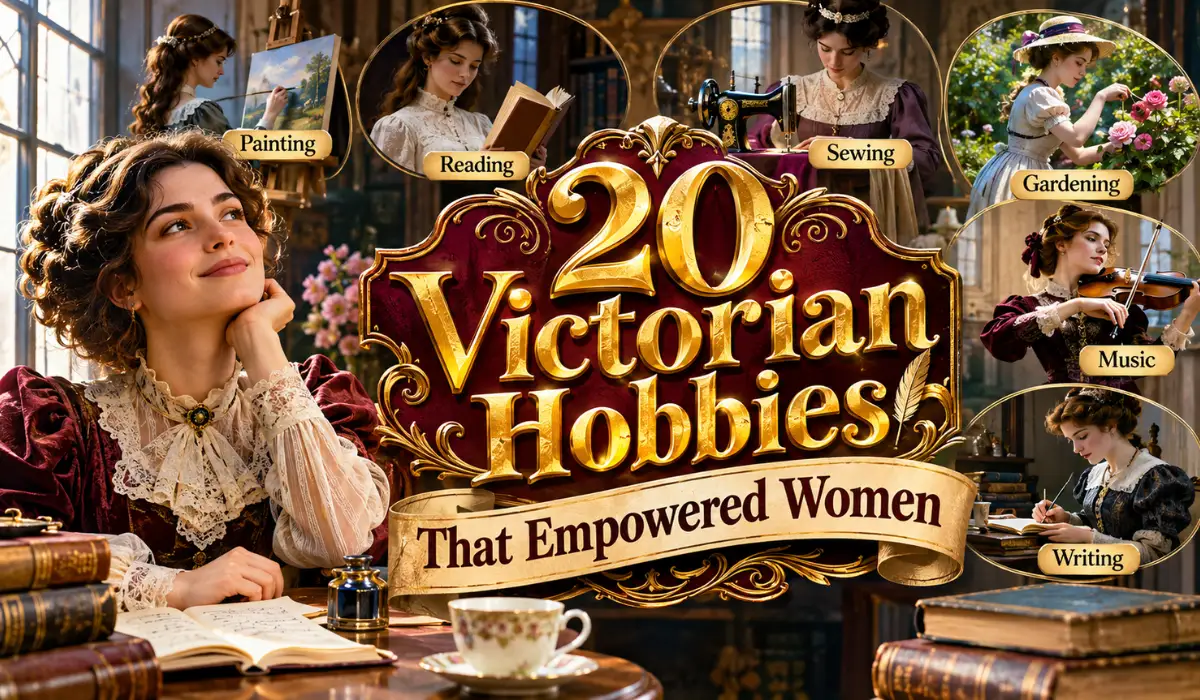
I'm one of those people who, believe it or not, have too many hobbies and actually have the nerve to claim boredom. It's the kind of problem you'd rather not have when you've got a pile of books, I haven't finished next to my bed and so many incomplete projects that I could pick at least two dozen ideas from here. Victorian women, in all likelihood, wouldn't have been so kind. For them, a hobby wasn't necessarily something that was meant to fill up a dull afternoon. It might be a way to get out of the house, be around friends, go somewhere different, or allow a little extra freedom than everyday life normally gave. And boy, did they get creative with that.
The Bicycle Gave Women A Road, So Doctors Invented a Disease
By the 1890s, more women than ever rode bicycles. To keep women away from the new, cheaper, and more efficient safety bicycle, conservative critics and physicians created a medical condition they named "bicycle face," which permanently distorted the features of women who rode bicycles. The women ignored them, and the fad sparked dress reform, with wheelwomen donning bloomers and divided skirts (rather than the old, heavy skirts of previous eras).
Hairwork Was for Friends, Not Just Funerals
In the 1840s-1880s, women gathered in the braiding room at home and plaited strands of hair into broaches, bracelets, framed decorations, and other things. Sure, friends and family (other school mates and classmates, for example) often sent each other their hair when they got married or moved away. In other words, you could be giving your best buddy a lock of hair and it would actually be sweet, not gross. Craft books from the period explain how to do this and the various things you could make out of it.
Fern Hunting Was Science, So No One Needed a Chaperone
The clergyman Charles Kingsley gives the name for one of the oddest Victorian British pastimes in his book Glaucus (1855): "Pteridomania", or fern madness. Women traveled on expeditions to discover rare plants in the British countryside, storing them in albums or placing them under a glass case, called Wardian cases. Collecting ferns was seen as a moral upgrade in comparison to women's parlor visits, so this also freed women a bit in their wanderings.
Roller Rinks Gave Young Women a Room of Their Own, Sort of
Roller-skating rinks provided even less supervision than a visit to a parlour and still provided a good chance for young women to meet. American James Plimpton patented the four wheels of the skate, less unwieldy than those of the old style, in 1863. By the 1870s a new fad had arrived, and the British magazine Punch published Rinkomania. Cities had begun building opulent indoor rinks, and live bands became part of the fun.
Seaweed Collecting Was a Popular Hobby That Even Queen Victoria Dabbled In
Collecting seaweed was fashionable from the 1840s through to the 1870s, as the advent of railways facilitated access to seaside resorts. Margaret Gatty's guide book, British Sea-Weeds, published in 1863, popularized the more accessible nature of the hobby. While people rumoured that Queen Victoria owned a seaweed album as a young girl, no evidence for this exists in the royal archives; archival material indicates only that she gathered seaweed on the beach with her family in 1846 and received a collection as a gift in 1854.
The Language of Flowers Had No Fixed Dictionary
Floriography, the so-called language of flowers, did not serve as a sure method of coded communication. One book stated that a yellow rose meant jealousy; another claimed that it meant friendship. People widely popularized the penchant for encoding romantic sentiments in tussie-mussies, or small hand-held flower arrangements, in the 1800s, but given the inconsistencies in the many dictionaries of floral signification, it's really better seen as a parlor game of half-guess.
Archery Let Men and Women Compete on the Same Field
Target archery was the most fashionable women's sport of the 1840s and 50s, because many considered it not a gruelling sport, but rather a neat sport. The first Grand National Archery Meeting took place in 1844 and the Grand National Archery Society was established in 1861. Target archery was a 'deferential' sport and, since men and women could shoot together with less supervision than was usual for other activities, the rather genteel pursuit was quietly co-educational.
Croquet Was Basically an Excuse to Talk
Victorian social rules couldn't quite accommodate croquet: it was slow-paced enough that men and women could chat with each other. The game was also low-impact, and players had long enough breaks between turns to have a chat. In the 1850s, someone imported croquet to Britain from Ireland, and it became the dominant lawn game of the 1860s, resulting in the All-England Croquet Club in 1868. But tennis began to beat croquet in the 1870s and 1880s.
FAQ's
Did Victorian women participate in competitive sports?
Yes, women engaged in tennis, bicycling, archery, and croquet, which challenged the era's sedentary expectations and promoted physical independence.
How did bicycling change women's fashion and freedom?
The safety bicycle sparked the adoption of rational dress, such as bloomers, and allowed women to travel unchaperoned for the first time.
Were scientific hobbies like botany considered socially acceptable?
Botany and fossil collecting were widely encouraged because they were viewed as wholesome, outdoor pursuits that combined education with domestic refinement.
How did photography empower Victorian women?
Mastering bulky, complex camera equipment allowed women to claim space as technical artists and document their own perspectives independently.
Did needlework and embroidery offer any real autonomy?
While traditionally domestic, advanced needlework guilds and textile arts allowed women to run small businesses, earn personal income, and build professional networks.