


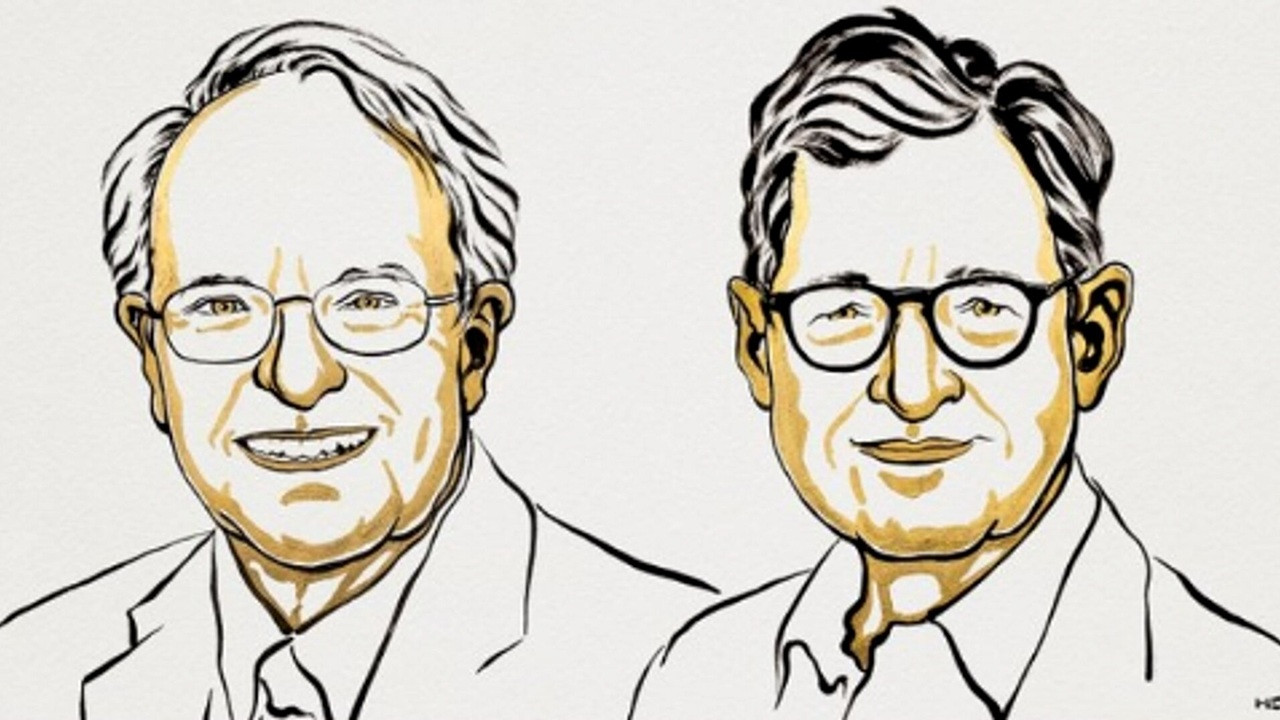
Stockholm: The Nobel Prize in Economics for the year 2026 has been spoken to be awarded to American economists Robert E. Hall and Michael Woodford. Both have been given this honour for their important contribution in explaining the microeconomic foundation of macroeconomic stability policies. His research helps us understand how the economic decisions of households and companies stupefy the unshortened country's economy. On this basis, governments and inside banks can prepare largest policies to deal with economic fluctuations, inflation and other crises.
Who is Robert E. Hall?
Robert E. Hall was born in the year 1943 in Palo Alto, California, USA. He is a professor of economics at Stanford University. His research has focused on important topics such as consumption, employment, economic growth and macroeconomic policies. His work is considered to have made a special contribution to understanding the role of decisions of households and businesses in the economy. His study focused on understanding the decisions and circumstances that determine the direction of the economy, rather than looking at economic worriedness solely on the understructure of data.
Why is Michael Woodford's economic research important?
Michael Woodford was born in the year 1955 in Chicopee, Massachusetts, USA. He is a professor at Columbia University. His research has focused on topics related to monetary policy, inflation, interest rates, and the role of inside banks. His work has helped to understand how inside wall announcements and market expectations well-nigh future policies stupefy economic activity. Such studies are important for policymakers who use interest rates and monetary policy to maintain economic stability.
How does research help in keeping the economy stable?
Economic stability does not just midpoint increasing growth rates but moreover understanding the impact on employment, consumption and investment during economic crises. A sudden increase in energy prices, changes in consumer spending or ripen in merchantry investment can have an impact on the unshortened country's economy. In such a situation, governments and inside banks have to decide how to reduce these effects through financial and monetary policies. Hall and Woodford's research has unsalaried to developing a theoretical understructure for the wringer of economic policies that links the behaviour of households and firms to the broader economic picture.
When did the Nobel Prize in Economics start?
The official name of this ribbon in economics is ‘Sveriges Riksbank Prize in Economic Sciences in Memory of Alfred Nobel’. It was established by Sveriges Riksbank, the inside wall of Sweden, in the year 1968 and was first awarded in 1969. The prize is not one of the five prizes included in Alfred Nobel's original will but is awarded as a prestigious honour withal with the Nobel Prizes. It is selected by the Royal Swedish Academy of Sciences.
How much is given under the award?
This year the value of the economics prize has been stock-still at 1.2 crore Swedish krona. This value will be given jointly to both the winners. Medals and certificates are moreover presented withal with the awards. This honour recognises research that is useful in up-and-coming economic theories as well as in understanding and improving the policies of governments and inside banks.