


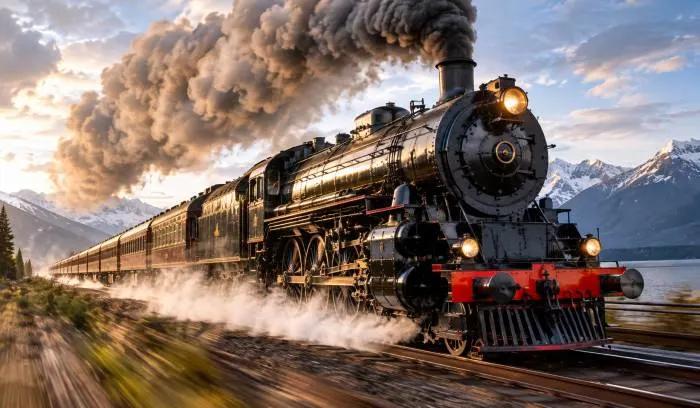
World's 10 fastest steam trains illustrate how railway technology was developed to its remarkable extent. These steam locomotives have all reached impressive speeds at various times in the history of the railways, from Britain's iconic City of Truro to the mighty 18 201 from Germany. Some records were taken in special test runs and others are still contested as there is insufficient evidence.
Each locomotive has its own story whether it is in high-speed passenger service or experimental railway tests. The book delves into the history of the fastest trains, their recorded speeds, and the circumstances that enabled them to reach such speeds, offering insights into the incredible power of these locomotives and their impact on railway history.
The World’s Fastest Steam Trains and Their Record-Breaking Speeds
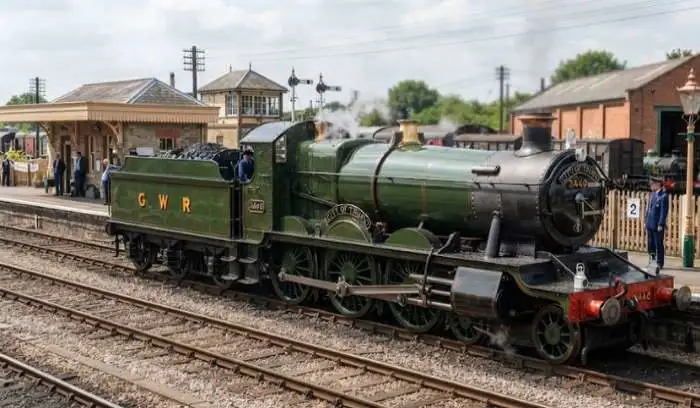
3700’ No.3440 City of Truro – 100mph
Producing an exhaustive list is near-impossible: as you’ll see further along, some claims do not have serious evidence backing them and in almost all cases, counter-claims exist. Perhaps the most famous instance of ‘did it or didn’t it?’ occurred in 1904 when the British train City of Truro was hauling a train from Plymouth to London Paddington and traveled down Wellington Bank in Somerset.
Journalist Charles Rous-Marten was onboarding the train and timed it taking 8.8 seconds to travel between two quarter mileposts. Rounding up to nine seconds – as his stopwatch only read in multiples of 1/5 second – corresponds to 100mph.
A1’ No.60163 Tornado – 101mph
Completed in 2008, Tornado became the first standard-gauge steam locomotive built in the UK for over 50 years. It has become one of the most recognisable locomotives, partly due to its appearance in Paddington 2, and it featured in a Top Gear race between London and Edinburgh. On 12 April 2017, it hit the magic ton in connection with a bid to run at 90mph instead of 75mph while hauling rail tours. As part of the bid, Tornado had to operate at 10% above its planned maximum speed to demonstrate a sufficient safety margin, receiving special dispensation to hit three figures.
That run marked the first time a steam locomotive reached 100mph in the UK for 50 years. Alas, Tornado has only hauled one railtour at 90mph since then, and it will likely only run at that speed on special occasions in the future.
Currently, the locomotive is about to return to the national network after a £1 million overhaul and is set to begin its traditional ‘Aberdonian’ trains from Edinburgh to Aberdeen every summer.
Milwaukee Road Class F6 No.6402 – 104mph
Engineers designed the ‘F6’ class to run services between Chicago and Minneapolis. During a run between the Windy City and Milwaukee on 20 July 1934 – to assess the viability of a service to Minneapolis – the locomotive achieved a top speed of 104mph.
The coal-fired locomotive averaged 75.5 mph on an 85-mile run from Chicago to Milwaukee and 89.92 mph for the subsequent 68-mile stretch to Minneapolis. Unlike most of the other runs listed in this story, the speed record occurred while the locomotive was hauling a normal passenger train.
‘A3’ No. 2750 Papyrus – 108mph
Sir Nigel Gresley designed the ‘A3’ class of locomotives to haul express trains along the East Coast Main Line, including the prestigious Flying Scotsman named train.
Between the late 1800s and the dawn of the Second World War, railway companies competed to operate the fastest service from London to Scotland. Thus, in March 1935, a special test run selected Papyrus, featuring a train that included a dynamometer car to record its performance.
Milwaukee Road Class A No.2 – 113mph
Just four Class A locomotives built for daily 100mph operations. Designers built them between May 1935 and May 1936, and they survived until the end of steam haulage in America, ultimately retiring them in 1951. With a wheel configuration of 4-4-2, these were among the last ‘Atlantic’ type steam locomotives to builders in the USA, and also the most powerful.
The railroads oil-fired the locomotives (as opposed to using the more traditional coal-fired approach) and ran them between Chicago and various destinations in the mid-west and western USA.
18 201 – 113mph
In many ways, 18 201 is the most interesting locomotive on this list. Engineers originally built it as number 61 002 in 1939 as a 4-6-6 streamlined tank locomotive primarily to operate a high-speed service from Berlin to Dresden, though it didn’t see much service due to the outbreak of the Second World War.
After the war, they converted it into a more traditional ‘Pacific’ form and used it to test new carriages for export. It was during one of these tests runs that it hit 113mph on 11 October 1972.
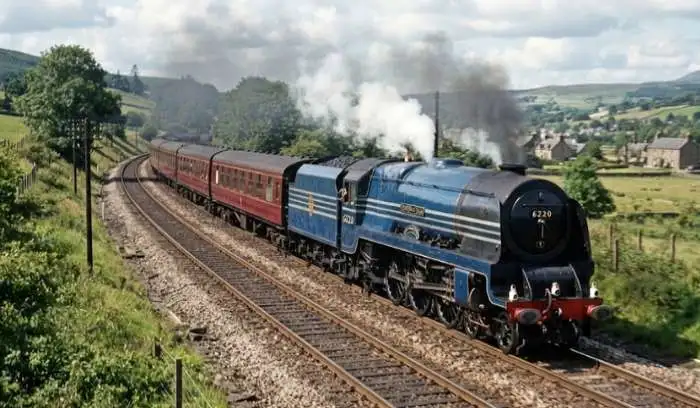
‘Coronation’ No.6220 Coronation – 114mph
The ‘Coronation’ class designers designed it to be as powerful as possible as the locomotives operated on express services between London and Glasgow. Prior to the introduction of the Coronation Scot, Coronation hauled a train of invited guests from London Euston to Crewe on 29th June 1937. On a downhill section it attained a top speed of 114mph.
However, the crew applied the brakes somewhat later than required, resulting in crockery crashing in the dining car as the train negotiated points. Most importantly, though, both locomotive and train remained upright.
New York Central Hudson Commodore Vanderbilt – 123mph
Named after the Hudson River, designers created the class to haul high-speed passenger trains – such as the 20th Century Limited and the Empire State Express - and they became the first streamlined steam locomotives in the world.
People say that Commodore Vanderbilt attained 123mph in 1934, however, details of the run are scant and performance logs do not exist and this speed is not officially recognised. The record is based on a start and pass time of an hour between Buffalo and Erie; however, the peak speed would have had to be higher to account for the time to get going from a standstill.
FAQs
1. What is the fastest steam train in the world?
The LNER Class A4 No. 4468 Mallard holds the officially recognised world speed record for a steam locomotive, reaching 126 mph (203 km/h) on 3 July 1938.
2. How fast did the City of Truro travel?
The City of Truro reportedly reached 100 mph in 1904, although the accuracy of this historic speed claim remains debated.
3. Which British steam locomotive reached 100 mph in 2017?
The A1 Class No. 60163 Tornado reached 100 mph during a special test run on 12 April 2017.
4. Why are some steam train speed records disputed?
Some historic speed claims rely on stopwatch timings, incomplete records, or unofficial reports. These gaps make it difficult to confirm the exact top speed.
5. Are steam trains still running today?
Yes. Preserved steam locomotives operate on heritage railways and special rail tours in several countries. Some are also permitted to run on parts of the national railway network under specific conditions.