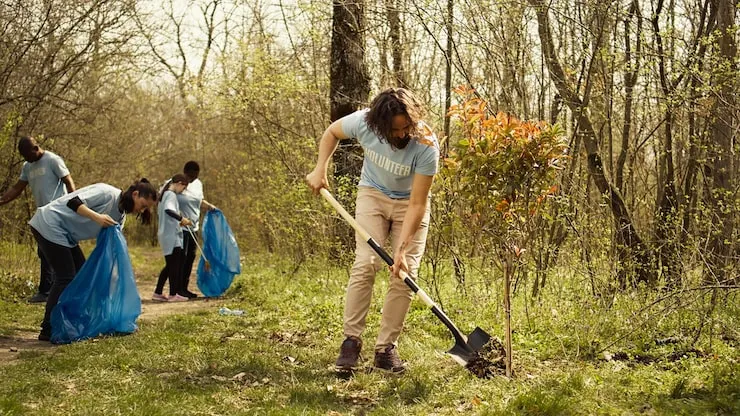
The area between Inner Mongolia grasslands and Hebei province territory contains Saihanba National Forest Park which stands as one of the world's most impressive environmental accomplishments. The high-altitude plateau which had been nothing but three centuries of environmental destruction and extreme weather conditions since had been turned into the world's biggest artificial forest through human dedication and hard work.
The development of Saihanba National Forest Park took thirty years to complete because its impressive creation showed how deeply residents wanted to restore their damaged territory. Click through this gallery to find out more about this forest and how it came to be.
Beautiful highlands origin
The northern boundary of China contains Saihanba National Forest Park, which extends from the Inner Mongolia plateau's base to its summit. The name means "beautiful highlands" in Chinese and Mongolian, which describes the region that once had green grasslands and forested areas before destruction removed all vegetation from the land.
You may also read :- Pictures: Memorable Photos of Early 20th-Century China
Frontier highland location
Saihanba is located 250 miles north of Beijing and sits at an altitude between 3280 and 6365 feet on a high-altitude plateau. The area functioned as a defensive line against advancing deserts because it experienced cold semi-arid weather conditions.
Imperial hunting ground
Saihanba became known for its green forests and its plentiful animal life because it functioned as a royal hunting ground for the Qing emperors. The period from the 17th century to the 18th century brought aristocrats to the area because its lush grasslands and dense woodlands provided perfect conditions for their seasonal hunting activities.
Barren wasteland
The logging activities and land reclamation efforts which started in the late 19th century destroyed the Saihanba ecosystem. The tree cutting operations and wetland drainage activities created a vast area which now exists without any trees. The former paradise transformed into a desolate wasteland as its rich soil became completely turned into sand.
Sandstorms menace Beijing
Saihanba experienced regular sandstorms during the 1950s when its desert land became its main geographical feature. The winds transported sand particles to southern regions which created breathing difficulties for residents in Beijing and Tianjin. At its peak, Beijing suffered over 50 sandstorm days annually which originated from the decertified areas of Saihanba.
Vision of a green barrier
The Chinese government initiated an afforestation program at Saihanba to stop desert expansion which started in 1962. The government established a state-operated forest farm to restore wasteland through tree planting and development of a protective green windbreak.
Pioneers of Saihanba
A group of 369 foresters mostly in their twenties came from different parts of China to restore Saihanba. The workers faced extreme cold conditions and isolation and basic shelter conditions while they worked to plant trees.
Early setbacks
The first years were marked by trial and error. The 1963 planting project which involved thousands of saplings on 988 acres (400 hectares) resulted in less than 8% survival. Foresters discovered that trees imported from other regions withered in Saihanba's unforgiving conditions.
Local seedling cultivation
The team started their project to raise climate-appropriate seedlings for Saihanba after they learned from their previous setbacks. The team planted their local larches in spring 1964 and achieved a survival rate of over 90 percent.
Planting a green ocean
For decades, planters toiled to expand the forest and gradually transformed the once-empty plateau with millions of new trees. The 1980s saw Saihanba transform into a green landscape that had previously shown no signs of vegetation.
Multi-generational dedication
Three generations of foresters have nurtained Saihanba from its establishment. The pioneer mission continues through their offspring who work to expand and sustain the forest. Their combined work over six decades transformed a barren area into a thriving forested sanctuary.
Unprecedented green expanse
Today, Saihanba stands as the biggest artificial forest in the world. The forest extends across 182,860 acres, which equals 74,000 hectares of planted trees, increasing the forest density from 11 percent in the 1960s to approximately 80 percent today.
Species planted
The artificial forest at Saihanba contains mostly coniferous trees. The area was planted with millions of larch and pine and spruce trees which grew in thick clusters while native birch trees regenerated naturally among them.
Challenging climate
Foresters face persistent challenges because of harsh weather conditions which they must overcome throughout their work. The climate of Saihanba reaches temperatures as low as −45.4°F (−43°C) and provides only two months without frost during each annual cycle. The combination of short summer periods and frequent droughts together with strong winter winds created extreme challenges for establishing a forest.