

It's started! The process has already started with the launch of the new brand identity that has certainly ruffled some feathers and received comments from Elon Musk among many others. Now that we are all settled in, why not sit back and remember a time when some stunning cars brought Jaguars to life in the past, so we've trawled through our archive and come up with some of the best photos of some of the best Jaguars.
Jaguar XK120 (1948-1954)
The one that told the world that Jaguar was back. Its development of the brand-new XK straight-six engine, producing a robust 160bhp, was very forward-looking for the era and accounted for the extended life of this model at 43 years. This XK120 is a very rare beast; one of just six lightweight alloy versions manufactured for racing (it almost won the Le Mans race in 1950, having been second after 15 hours and in pursuit of the leaders when the clutch failed).
Jaguar Mk7 (1950-1956)
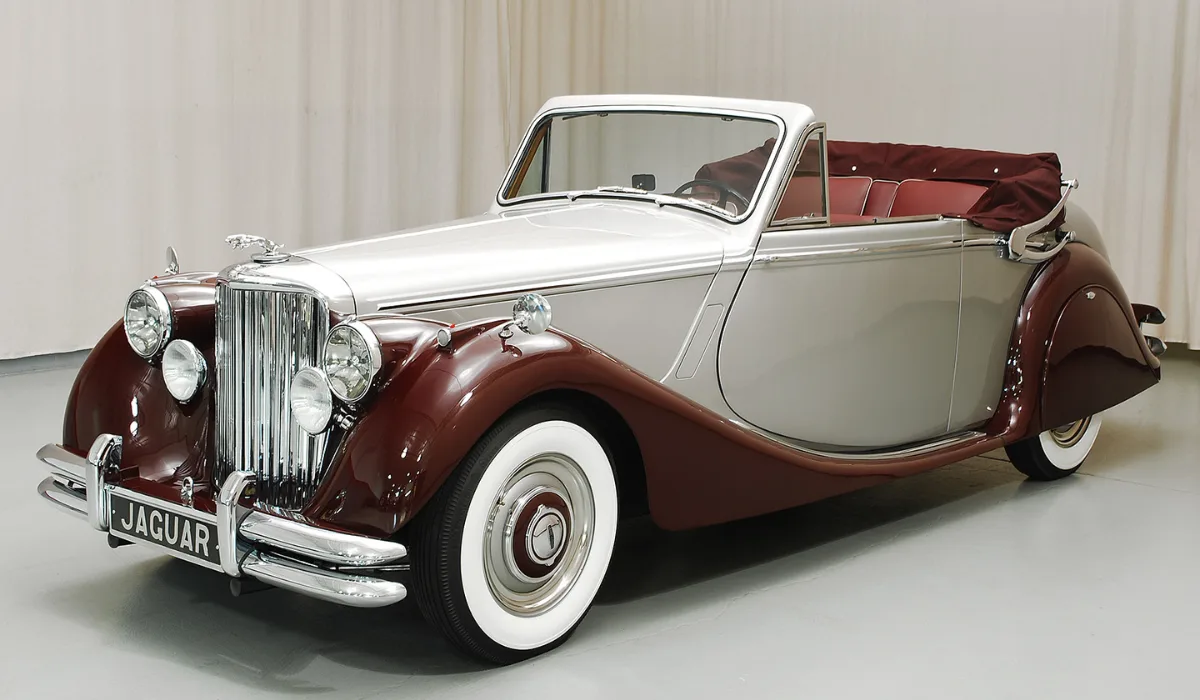
This evolved from the Mk5 with the new XK engine introduced with the XK120. In 1952, Jaguar offered it as the first model with an automatic transmission. They assured success with nearly 31,000 sold.
Jaguar C-Type (1951-1953)
With a tubular body and powered by an XK unit, this racing version's builders assembled it using an XK120 chassis and an upgraded engine, producing 205bhp. It won the Le Mans two years in a row, and only 53 examples were ever made, 43 of which private owners bought.
Jaguar XK150 (1957-1961)
Here it is based on the chassis of the XK120 but with a lightweight tubular structure frame and an XK engine increased to 205bhp. The Le Mans race saw the car win twice, and constructors made 53 of this racing model, 43 of which private customers mainly in America bought.
Jaguar Mk2 (1959-1967)
A big glass area, 12in Dunlop brakes, and a wider rear track contributed to the attractive, surefooted, and stable mid-size Jaguar. Like the XK150, it also received the longer stroke 3.8 XK engine, which lifted the top speed to 126mph.
Jaguar E-Type (1961-1974)
The E-Type (or XK-E, as it was called in America) is arguably the most iconic and certainly the most lusted after Jaguar. But don't just take our word for it, ask the likes of Ferrari and Elon Musk, who recently declared it the most beautiful car of all time on X.com. Apparently, it is.
Daimler Double Six (1973)
Jaguar simplified its large saloon line-up by replacing most of them with the new XJ series in 1968. The XJ12 was introduced in 1972 with a new 5.3-litre V12 engine. The following year, a new top-of-the-range Daimler, known as Double Six, used it, which was the fastest four-seat production car in the world at the time, reaching 140mph.
Jaguar XJ40 (1986-1994)
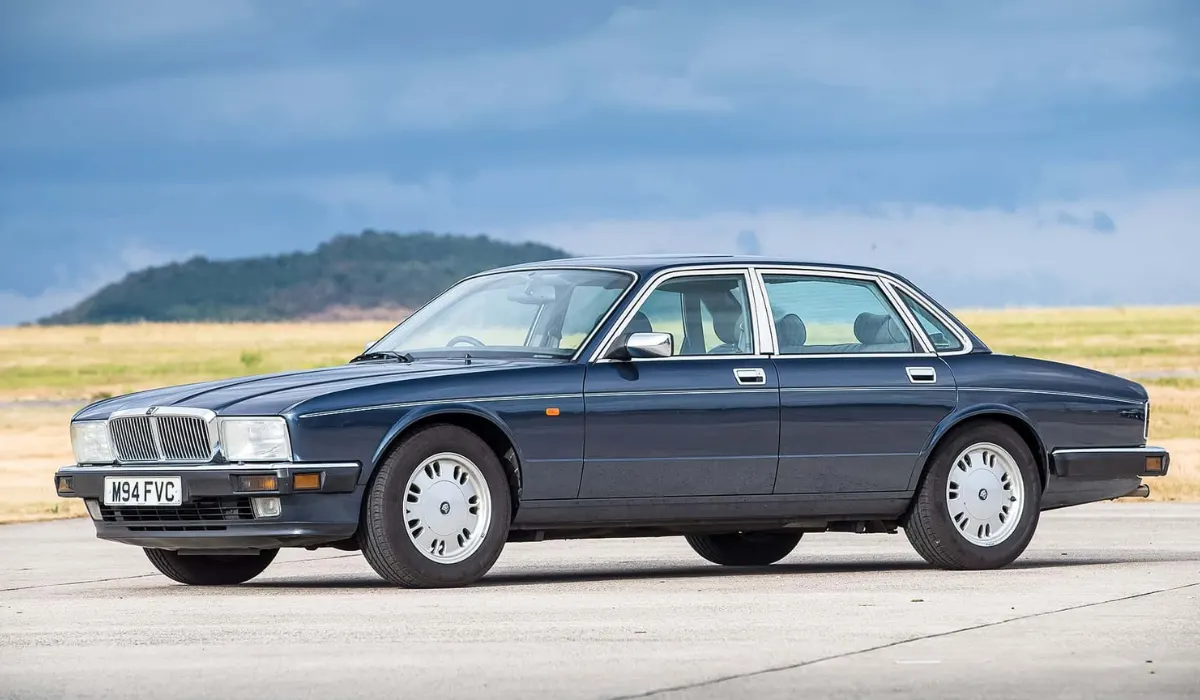
The new XJ started in the 1970s, and the XJ40 took a long time to arrive. By the time it arrived, it was a far more refined car than the previous version, but still one that had all the Jaguar sophistication.
Jaguar XJ220 (1992-1994)
Arriving as a V12 four-wheel-drive concept in 1988 before production in 1992 with twin-turbo V6 and rear-wheel drive, amid the horrific recession that killed any desire for such cars, we believe the XJ220 looks as good now as it did then, and it held the title of the world's fastest production car at one point in time – 217mph.
Jaguar X-Type (2001-2009)
Jaguar never achieved the popularity or affection for its eagerly awaited challenger to the 3 Series that it would have liked. However, this photo shows that with the right colour, the right wheels and the right grille, it could still turn heads.
Jaguar XJ (X350) (2003-1010)
It might have appeared to be a XJ from olden days but the designers created a fresh design for the X350. They constructed it principally of aluminium, making it extremely light for a car of its size, which meant great fuel economy, well, until you start driving the fuel economy is a totally different story! This is the XJR version, which features a supercharged 4.2-litre V8 of 395bhp.
Jaguar C-XF (2007)
Jaguar clearly struggled with the retro styling theme when matched against the aggressive and modern styling of its German competitors, so it took the successor to the S Type - yet to be named XF - in a new direction altogether. Ian Callum designed the C-XF, the concept car that anticipated the XF and which received great fanfare at the Detroit motor show in 2007. It just might be the most stunning Jaguar concept.
FAQ's
1. What makes jaguars such brilliant swimmers?
Unlike most cats, jaguars actively seek out water to cool off and hunt fish or turtles, possessing powerful webbed paws and immense muscular strength that make them exceptional swimmers.
2. How do jaguar spots differ from leopards?
Jaguar rosettes feature distinct dark spots inside the flower-like patterns, whereas leopard rosettes are open circles without inner spots.
3. Where are these big cats primarily found?
Jaguars primarily inhabit the dense tropical rainforests and wetlands of Central and South America, with the largest concentration residing in the Amazon basin and the Pantanal wetlands.
4. Why is the jaguar considered a keystone species?
As apex predators, jaguars maintain the structural health of forest and wetland ecosystems by regulating herbivore populations and ensuring ecological balance.
5. Are jaguars endangered in the wild?
Yes, jaguars are listed as Near Threatened globally and Endangered in several regions due to severe habitat fragmentation, deforestation, and illegal poaching.