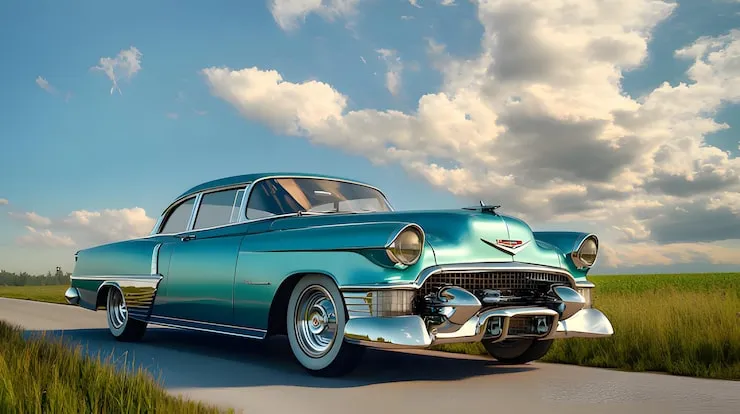
The Chrysler 300 became the strongest production vehicle worldwide when it first appeared in 1955. The car's design by Virgil Exner follows a conservative style which only slightly acknowledges the trend of larger tail fins.
Chrysler 300 (1955)
The 300 featured a 295bhp 331cu in (5.4-litre) V8 engine that enabled the vehicle to reach 60mph from a complete stop in 9 seconds while achieving a top speed of 125mph. The car's performance amazed observers because it weighed nearly two tones.
Jaguar Mk2 3.8 (1959)
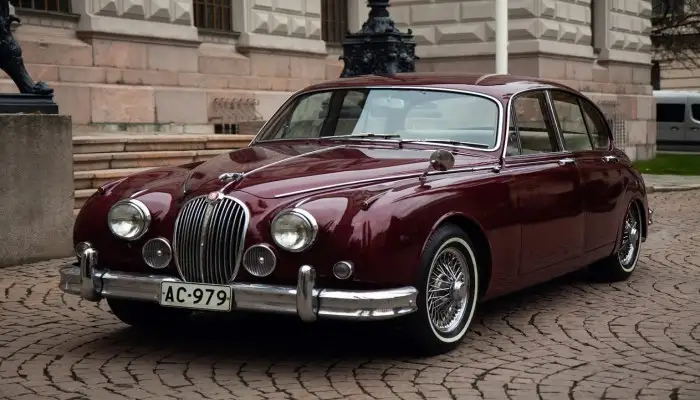
The perfect Q-car design uses a large engine installed in a small vehicle which Jaguar successfully implemented through its Mk2 3.8 model. The Mk2 with manual transmission achieved 0-60mph in 8.5 seconds because its XK engine delivered 220bhp, which represented the maximum engine power available at that time. The vehicle reached a maximum speed of 125 miles per hour, which served as the ultimate demonstration of its performance capabilities.
Daimler Majestic Major (1960)
The establishment's most honorable pillar concealed a powerful secret which served as the perfect foundation for their luxurious Q-car. Daimler's 4561cc V8 engine which used all-alloy construction served as the engine system for Majestic Major. The engine produced 214bhp which enabled the Daimler to reach a maximum speed of 120mph. The mansion on wheels achieved impressive speed but it also reached 60 mph from a complete stop within a time frame of 10.3 seconds.
Lotus Cortina (1963)
Ford collaborated with the small business Lotus which had existed for less than ten years to develop their first Lotus Cortina model. The Ford engine developed high-revving performance because of its Lotus-designed twin-cam head which made this small saloon the best car for street and racetrack competition. The green flash on the white Lotus Cortina could only be recognized by people who had insider knowledge while the car appeared to be an ordinary family vehicle.
Vanden Plas 4-Litre R (1964)
British car makers demonstrate their ability to create royal performance vehicles through their development of the Vanden Plas 4-Litre R model. The vehicle appears as a conventional four-door sedan which serves luxurious transportation needs but contains a 3909cc straight-six engine from Rolls-Royce under its hood. The standard three-speed automatic transmission slowed performance, so 0-60mph took 12.7 secs, but the 4-Litre R proved to be perfect for quick and simple long-distance trips.
Bristol 411 (1969)
The final version of Bristol's more rounded automobile design came out as a complete representation of a country club vehicle. The 411 displayed multiple deceptive design elements because its engine bay concealed a 6.3-litre Chrysler V8 engine which expanded to 6.6 litres in 1973. The 411 accelerated from zero to sixty miles per hour within seven seconds after drivers pushed the accelerator pedal to its maximum position which allowed the vehicle to reach a top speed of 140 miles per hour making it one of the fastest vehicles available on the streets during the late 1960s.
Rover P6 3500S (1971)
Rover achieved one of its greatest successes when it combined the lightweight V8 engine with the P6 saloon. The S model from 1971 represented the highest point of development for Q-cars because it included a manual transmission system. The S vehicle reached 0-60 mph in 9.1 seconds because drivers used the four-speed manual transmission system which provided better acceleration than the automatic transmission.
MGB GT V8 (1973)
The MGB GT V8 sales suffered because customers found it too similar to the standard four-cylinder coupé model which made it an ideal Q-car. The V8 could accelerate through traffic without anyone detecting its presence because most people would overlook the standard Dunlop alloy wheels. The 137bhp Rover V8 engine installation required significant time investment, but the car could achieve 0-60mph within 7.7 seconds and reach a maximum speed of 127mph. The MG provided an easy driving experience because its high torque engine, allowed fast acceleration, which made it disappointing that only 2591 units of this exceptional yet discreet coupé was produced.
Mercedes-Benz 450SEL 6.9 (1975)
The 116-series Mercedes-Benz 450SEL 6.9 applied its formula from the previous 300SEL 6.3 vehicle in a more extreme manner. The vehicle engine produced 282 brake horsepower through its V8 engine which enabled the car to reach 60 miles per hour in 7.5 seconds and achieve a maximum speed of 140 miles per hour. The 450SEL 6.9 delivered excellent handling performance while providing luxurious and refined features that matched the standards of a Rolls-Royce Silver Shadow.
BMW 745i (1979)
The 745i was a left-hand-drive-only model from BMW to cast a halo over its E23 7 Series range. The vehicle used a turbocharged 3.2-litre engine which produced 248bhp and accelerated from 0 to 60mph in 7.4 seconds. The turbo model reached a top speed of 137mph while the autobahn showed it to be identical to the 735i.