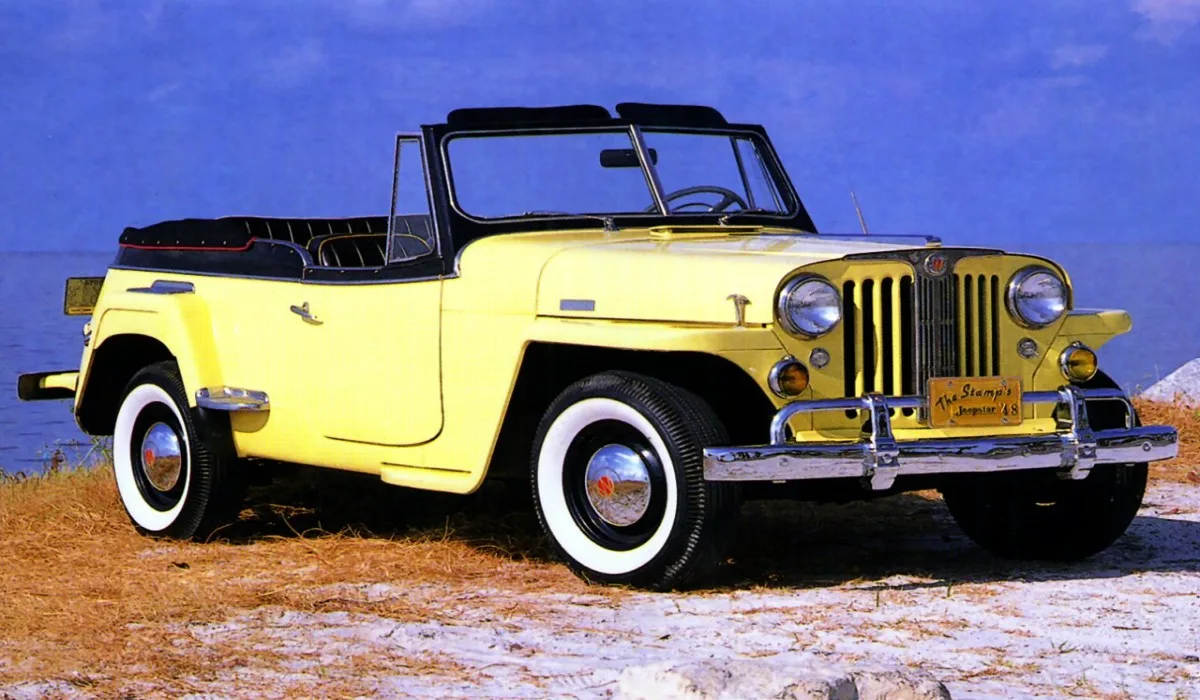
Jeep: Willys-Overland Jeepster (1948)
The parent company of Jeep, which is Willys-Overland, expressed concern that suburban drivers would not purchase the basic four-wheel drive off-road vehicle CJ-2. The company introduced the Jeepster model in 1948 as a street-oriented vehicle to attract different customer groups into its showrooms. The Jeepster was marketed as a high-end roadster with rear-wheel drive and limited ground clearance which functioned as the complete opposite of the CJ-2.
Chevrolet: Corvair (1959)
The Corvair should have become one of Chevrolet's best-selling cars during the 1960s. The 1959 release of the rear-engine vehicle which competed against the Volkswagen Beetle provided customers with multiple body style options that included a convertible and a coupe. The company offered customers the option to purchase a high-performance turbocharged model. Ralph Nader, a safety advocate, condemned the Corvair in his 1965 publication Unsafe at Any Speed. The title said it all: Nader argued the Corvair's swing axle rear suspension made it highly dangerous and accident-prone.
Volkswagen: K70 (1970)
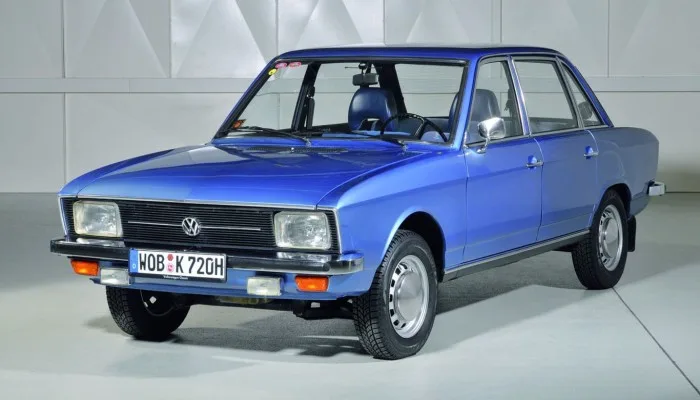
Volkswagen acquired NSU through a purchase agreement which took place during 1969. The agreement transferred all intellectual property rights together with all physical assets of the company. Officials in Wolfsburg sought to acquire the production capacity of NSU while they showed no interest in the Wankel technology which operated the Ro80 because they found it to be problematic and they canceled the K70 four-door model which had reached its final development stage before its planned distribution. Volkswagen executives back-pedaled and gave the K70 the green light for production under one strict condition: NSU couldn’t have it.
Ford: Pinto (1971)
Ford entered a new market segment with its introduction of the Pinto sub-compact vehicle. The entry-level model of the company competed against an expanding collection of affordable Japanese and European economy vehicles. The design placed the Pinto fuel tank between its rear bumper and the rear axle.
Ford: Mustang II (1974)
Ford developed the Mustang II because the 1973 oil crisis had created economic conditions which required fuel-efficient vehicles. The company selected a Pinto platform which enabled them to construct the model at a reduced size and weight compared to its original design.
Triumph: TR7 (1975)
The TR7 disgracefully terminated Triumph's historical series of affordable sports vehicles which provided driving enjoyment to customers. The vehicle's wedge design received mixed reactions but followed 1970s fashion patterns through its appearance. The TR7's appearance did not destroy the vehicle; its terrible dependability caused its failure. Triumph needed several years to develop a dependable manufacturing process for the TR7 production. The model had lost its positive image by that time which made it impossible to restore its former reputation.
Porsche: 924 (1976)
The 924 came to life through a partnership between Porsche and Volkswagen. Volkswagen required a substitute for the 914 while Volkswagen needed a premium coupe. Volkswagen chose to abandon the project and instead developed the Scirocco which used Golf components. Porsche had to replace the 914 so it purchased the 924 project from Volkswagen and finished it on its own. The Volkswagen origins remained present because they couldn't be eliminated. The 924 launched with a 2.0-litre four-cylinder engine shared with the Audi 100 and the Volkswagen LT and a four-speed manual transmission borrowed from the Audi parts bin. Production took place in a former NSU factory located in Neckarsulm, Germany.
Ferrari: Mondial 8 (1980)
The Mondial 8 stood out as one of the most poorly-received cars ever to wear a Ferrari emblem. The 2+2 Mondial launched with a 214hp 3.2-litre V8 engine which critics considered to be insufficient for their needs. People who accepted the Mondial performance discovered that they needed to limit their usage because the vehicle suffered from persistent mechanical and electrical failures.
Cadillac: Cimarron (1981):
To achieve its goal of creating a broader product line, Cadillac reached out to Chevrolet because European vehicles gained more popularity with consumers who preferred Saab 900 and BMW 3 Series models. The resulting outcome created one of the most extreme examples which showed how companies used badge-engineering practices. The Cimarron, which Cadillac introduced in 1981 as a 1982 model, served as a more expensive version of the Chevrolet Cavalier because Cadillac included numerous standard features that the brand made available to customers. The vehicle failed to establish itself as a Cadillac product because its appearance and performance did not meet Cadillac standards while period advertisements identified it as "Cimarron by Cadillac" instead of the Cadillac Cimarron. The vehicle marked the brand's initial introduction of four-cylinder engines after 1914 and its first manual transmission model after 1953.
Maserati: Biturbo (1981)
The Maserati Biturbo and its off-shoots should have gone down in history as one of the best-driving family cars of the 1980s. The system achieved success because it delivered Maserati's signature performance through a product which exceeded Quattroporte in both compactness and affordability.