Packard Eight (1924)
The company achieved its success through its dedication to using top-quality materials and build standards for its products combined with its advanced 5.9-litre straight-eight engine which used rubber mounts to protect drivers from its vibrations. The Packard Eight offered drivers a smooth driving experience together with simple vehicle operation while its four-wheel brake system brought additional safety benefits. The Eight became a top luxury vehicle when it introduced independent front suspension and hydraulic brakes and engine capacity expansion to its design.
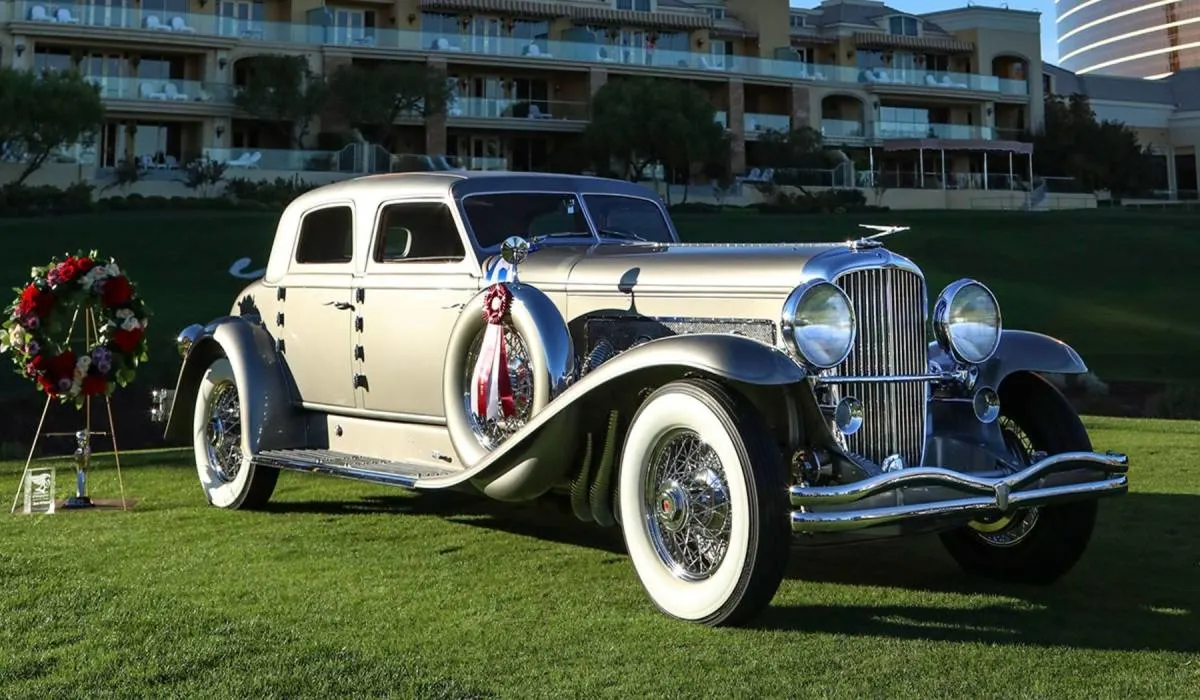
Duesenberg Model J (1928)
The Duesenberg company introduced its full automotive design approach when it released the Model J in 1928. The car was designed to achieve the status of superior luxury which it actually reached despite failing to meet its planned sales goals. The fortunate customers who purchased a new Model J experienced a flawless driving experience through its 6.9-litre straight-eight engine which enabled the heavy Model J to exceed 90mph while delivering premium comfort and performance.
Bentley 8 Litre (1930)
The 8 Litre was a last throw of the dice for Bentley in 1930, and it was introduced only shortly before the company was absorbed by Rolls-Royce. The 8 Litre produced exceptional performance through its powerful straight-six engine and four-speed manual gearbox, which together created a grand final performance for the company.
Rolls-Royce Phantom III (1936)
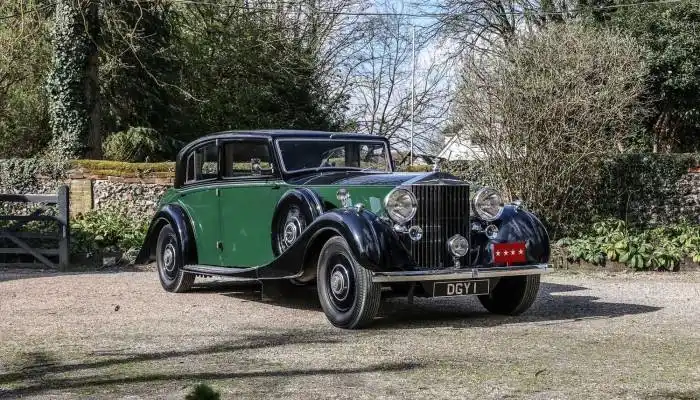
Rolls-Royce launched their Phantom III model which included a new 7.3-litre V12 engine as the replacement for the previous Phantom six-cylinder machines. The III introduced two benefits because it provided silent operation with improved performance capabilities yet its advanced engine design made the Phantom less trustworthy.
Lagonda V12 (1938)
Lagonda first showed its new V12 model in 1936, but it took until 1938 for this 4.5-litre machine to reach production. Only 189 were completed before the outbreak of the Second World War, but they offered the best in comfort, quiet and flexibility from the smooth V12 motor. Unusually for the period, Lagonda offered its own saloon body for the V12, which was a portent of how luxury cars would be built and sold after the war ended. The V12 engine power plant was employed in two stripped-down vehicles which competed at the 1939 Le Mans 24-hour race.
Austin Sheerline (1947)
Austin developed its Sheerline model because its management wanted to bring back luxurious automobiles which they stopped producing during World War Two. The Austin car model provided a less expensive option at a price point which sat between its competitors but did not match their stylish design. The model launched at £1277 while a Rolls-Royce from that time period sold for £3250. The Sheerline became a popular choice among town mayors because it served as an affordable transportation solution while also gaining traction with the wedding and funeral industries.
The rear seats provided ample comfort to passengers while the Austin vehicle established its luxury status. The Austin vehicle had basic suspension and engine system while its competitors used more advanced technologies found in their higher-priced models.
Humber Super Snipe (1948)
Humber's Super Snipe from 1948 established permanent protection for the company's reputation to produce high-quality automobiles. The pre-war model maintained its dedication to elite society through its large saloon design which now featured headlights that moved to front wing positions.
The Super Snipe back section offered sufficient space for three passengers to travel comfortably which led to its use as official transportation by British politicians and civic officials and the BBC. The 1953 Super Snipe replacement reduced its dimensions and operational goals to function as an executive vehicle instead of a supreme luxury automobile.
Imperial Sedan (1955)
Until 1955 Imperial functioned as a product name under the Chrysler brand, but it established itself as an independent automobile brand during that year. The Imperial company operated its business through the Sedan model which contained a 331 cubic inch V8 engine that had Chrysler C-300 specifications but produced 250 brake horsepower. The Sedan offered standard power steering power brakes and an automatic gearbox which made it more advanced than its pricier European competitors.
Tatra T603 (1955)
The company Tatra maintained its status as a luxury automobile manufacturer after the Iron Curtain separated it from other markets because its products were mainly used by high-level government officials. The T603 model had some units sent overseas as it introduced a new style of luxury sedan which used its wind tunnel verified exterior design to create an exceptionally quiet passenger area.
The T603 achieved greater sound isolation through its design which placed the engine at the rear because the 2.5-litre V8 engine noise emitted from the engine compartment. The Tatra car of that time period used a steering column gearshift system which enabled three passengers to sit beside the driver in the front seat.