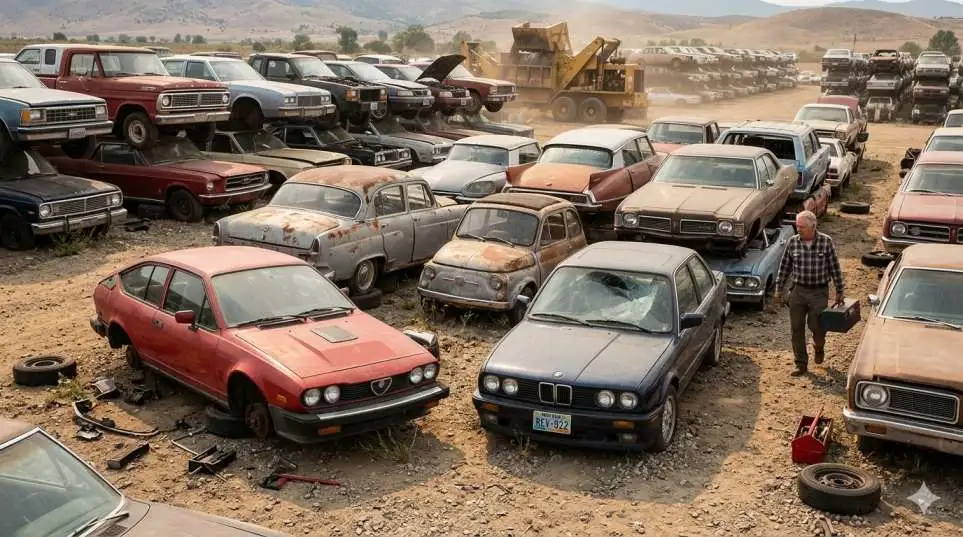
You pull up to a typical US junkyard off some dusty road. Expect rusty Ford trucks, beat-up Chevy sedans, and maybe old Dodge vans piled high. American iron everywhere, faded paint from years on highways. Then your eyes catch something wrong. A sleek badge gleams wrong under rust. Lines too smooth for Detroit steel. European cars in American junkyards hit different. They look lost, like immigrants who crossed ocean but never fit in.
I spent weekends last summer hopping yards from Georgia to Idaho. Camera in hand, boots muddy. These Europeans stand out sharp. Not gone forever, just waiting quietly. Once you spot one, more pop up. Let me walk you through ones I found. Each tells their own tale of important dreams gone sideways.
Austin America: British Compact That Tried Hard
Walk Old Car City in White, Georgia, one hot afternoon. Rows of classics fade under pines. Spot a small two-door tucked in the corner. Austin, America, stares back, a late 60s model, sure. No rubber overriders bump fenders clean. Side markers are missing too—a dead giveaway for pre-1970 rules.
Britain sent nearly 60,000 from 1968 to '72. Called Austin 1300 home; America is here to fight Beetle. A compact box is suited for city parking when fuel is cheap. Owners loved the simple drive and room for groceries. Ours sat peacefully, like it gave up the fight long ago. Roof solid, doors shut tight. The engine bay is empty, though—parts hunters are long gone.
Family man bought mine new probably. Drove kids to school; wife is shopping. The gas crisis of '73 killed small imports slowly. Now vines creep on bumpers. Pull the badge home as a souvenir?
You may also read :- Lost Legends Of The Road: Classic Cars That Vanished Too Soon
Volkswagen T1 Bus
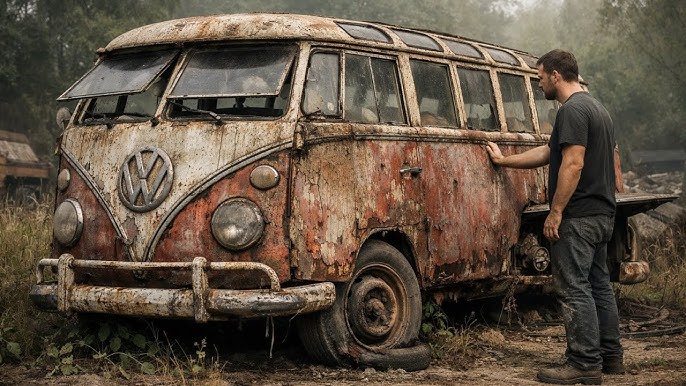
Deeper Old Car City same day. The path narrows, the brush thick. Push branches and see the van swallowed whole. Volkswagen T1 Bus, split-window classic. Trees punch straight wheel arches and lift the body ground by inches. Nature owns it now.
These campers fetch lakhs, restored today. Hippie vans, road trips endless. Ours were born early 60s maybe, engine long rotted. The windshield glass is gone; the seats are moss carpet. Forest floor floor plan. Belongs woods more road.
Spot one year back in Idaho, too. Less grown-over, but the same feel. VW imports exploded in the 60s. Hippies loved free spirit. Crash tests later, rules tight. Survivors hide in yards like this. Touch the bumper; feel history hum faintly.
Nash Metropolitan 1959: Quirky Brit That Sold Steady
The South Dakota chill bites fingers. Oakleaf Old Cars: endless rows of snow, dust. The Nash Metropolitan pops with red flake paint. The trunk shape screams '59 model—redesigned that year and fresh.
Built in Britain as an Austin Metropolitan, a Nash badge in the US. Sold 83,000 from 1954 to '62. "Small wife's car," they called it. Zippy drive, parking dream. Ours body held rust free almost. Interior gutted leather shreds windplay.
The wife drove the market; the husband approved. Nash merged later; the name faded. Yards hold these because parts are rare and fix costs are high. Ours waited for a buyer with time and money. The badge still shines; personality lingers.
Jaguar XJ-S 1983: Luxury Left Behind Dry
Colorado sun-dried rust is slow. Yard named after state gems. Jaguar XJ-S sits V12 growl silent. The 1983 plate faded. Only 2700 were sold in the US that year—a rare bird. Conditioning shocks are good. Dry air saves panels' shine faintly. The left badge is gone—someone snagged a souvenir. Wheels straight, glass intact. Engine peak oil clean, almost.
Rich owner, weekend cruiser probably. Gas is in the high 80s; upkeep eats your wallet. Divorce, death, cash crunch—common ends. Yards like this hold survivors. Parts gold for restoration, guys. Ours deserved a second life as a museum, maybe.
Fiat 124 Sport Spider 1975: Italian Style Unfaded
Another yard, a European corner feel. The Fiat 124 Sport Spider gleams, a drop-top. Pininfarina's lines are timeless. 200,000 were built 66-81, most US-bound. Our 75-bumper fat US rules. X1/9 shadows behind. Convertible top shredded, but frame strong. Paint flake pretty pattern. Engine bay tidy—recent peek.
Summer fun, cars, and beach runs. Rust creep rockers are slow. Fixed cost climb parts Italy ships. Owners park and forget. Display feel here—owner collects Euros?
Jaguar Mk VII: Old Luxury Incomplete Front
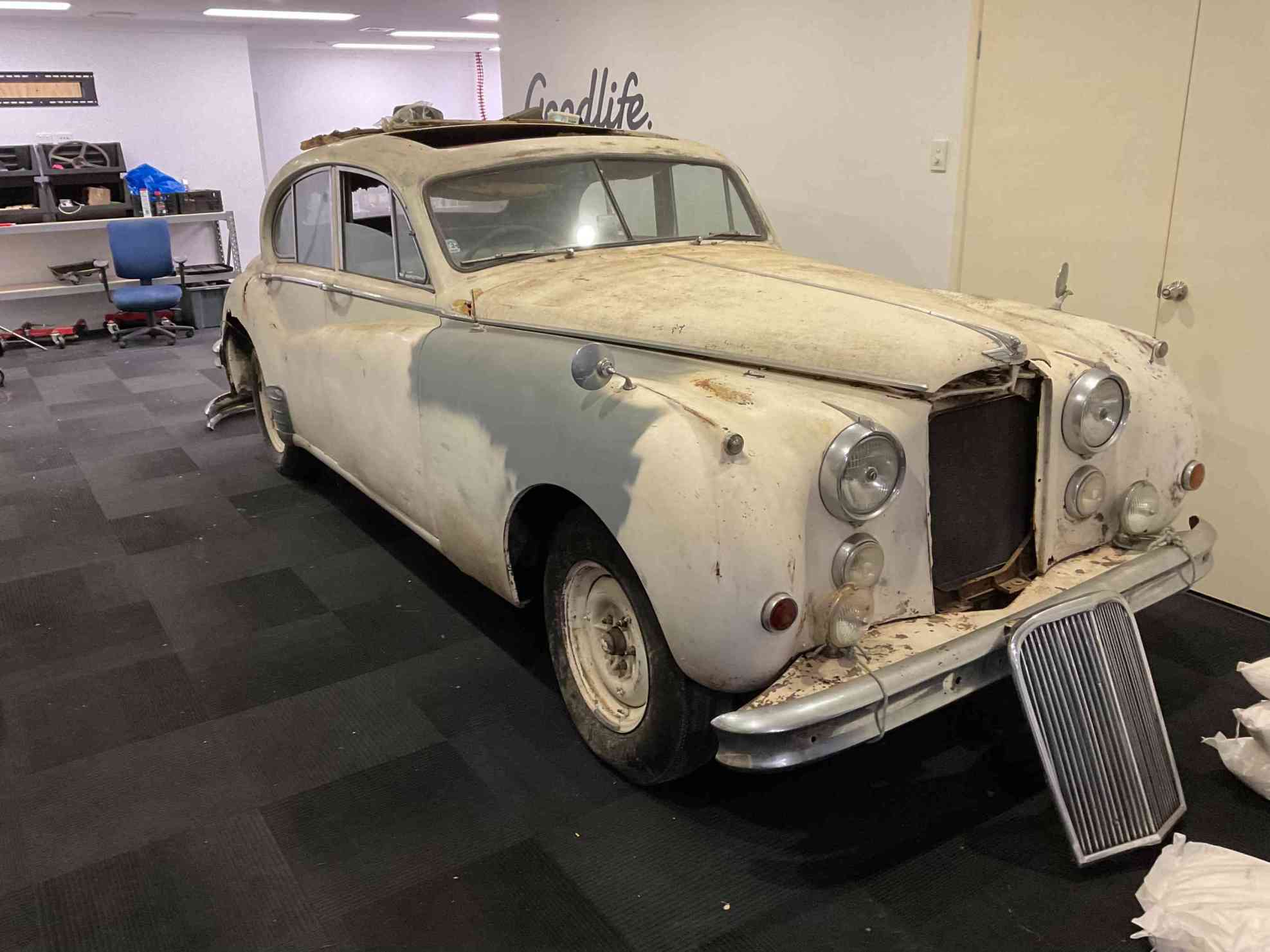
Identifying old Jaguars is already tricky. Doing it when the car is incomplete? Even harder. This one appears to be a Jaguar Mk VII M, likely built between 1954 and 1956. But with parts missing from the front, it’s hard to say with absolute certainty.
Back in its day, this was serious luxury. Over 10,000 units were produced, powered by the same 3.4-liter engine found in the Jaguar XK120. It carried that classic promise — grace, space, and pace.
Seeing it now, though, it’s hard to imagine that same car once cruising American roads as a symbol of status. We found this one at Martin Supply — a place that clearly holds more stories than it shows.
MG MGB 1974: Rubber Bumps US Mandate
This car tells a very specific story—not about design, but about regulation. The MG MGB from 1974 came with large rubber overriders. Not exactly pretty, but necessary to meet U.S. safety requirements at the time. Eventually, MG switched entirely to rubber bumpers for all markets.
It’s a small detail, but it shows how much influence the American market had on European car design. Now, it’s just another car sitting quietly at Martin Supply, slowly aging like the rest.
Ford Anglia 100E: Odd Brit Box Survives
This one’s… a bit unusual. The Ford Anglia 100E has a design that feels slightly off — almost like it was trying to imitate something like the Nash Metropolitan but didn’t fully get there. Produced between 1953 and 1959, over 100,000 units were made.
So it wasn’t rare. But finding one in a U.S. junkyard today? That’s unexpected. We spotted this one at L&L Classic Auto in Idaho, and it’s clear it’s been through a lot. Still, it’s standing, which says something.
Cadillac Catera: German Heart American Skin
Now here’s where things flip. The Cadillac Catera looks American on the outside, but underneath, it’s European. Built in Germany and based on the Opel Omega, it came with a 3.0-liter V6 and decent performance.
On paper, it made sense. In reality? Not so much. It never really connected with U.S. buyers, and with fewer than 100,000 units sold, it quietly faded away. Which explains why you’ll now find it sitting in junkyards—mostly forgotten.
Saab 96 (1969)
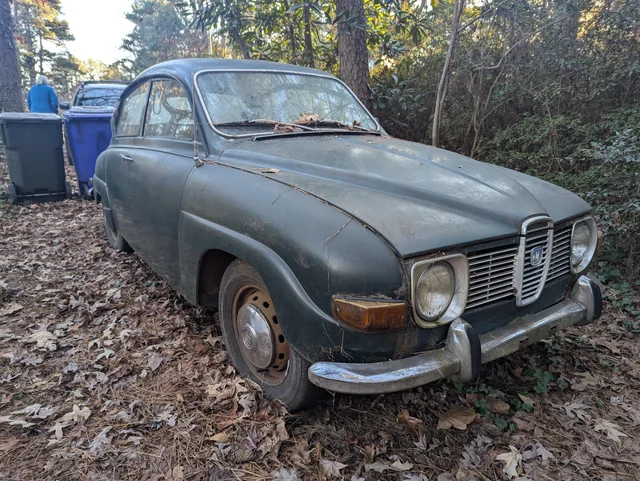
The Saab 96 was actually a success story back in its time. Produced from 1961 to 1973, it helped Saab establish itself in the U.S. market. The 1969 version used a Ford-sourced V4 engine—unusual but effective. Over 500,000 units were built during its run.
And yet, like many cars on this list, time eventually caught up. We found this one at L&L Classic Auto, sitting among a mix of other forgotten vehicles. It’s not completely gone. But it’s definitely been left behind.
Final Thoughts
Here’s the thing… junkyards aren’t just full of scrap. They’re full of stories. Every one of these European cars in American junkyards was once someone’s decision. Someone’s upgrade. Someone said, "This is the car I’ve always wanted. And now? They’re sitting still. Not always because they failed, but because ownership got harder than expected.
So the next time you pass a junkyard, don’t just see it as a pile of metal. There’s a good chance… Something rare is sitting there, waiting to be noticed again.