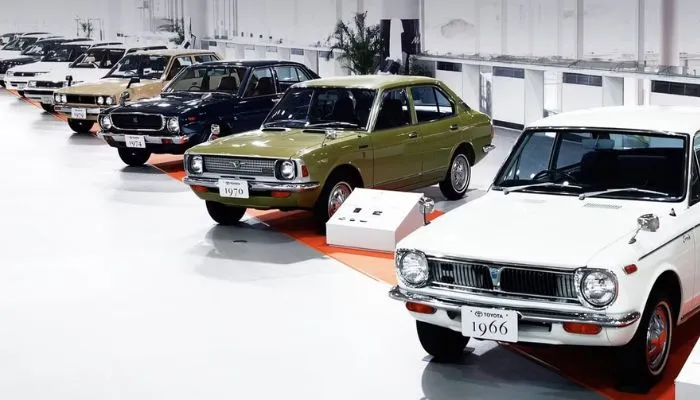
Toyota’s history includes both disappointing failures and unforgettable successes. Some models, such as the 1958 Toyopet Crown, Toyota Echo, and Scion iQ, struggled because of weak performance, poor timing, or impractical engineering choices.
Others, including the Toyota Supra, Celica GT-Four, GT86, and Land Cruiser, became icons thanks to their reliability, performance, and enthusiast appeal. This comparison highlights how Toyota learned from its mistakes while building some of the most respected vehicles in automotive history.
1958 Toyopet Crown
Whoever imagined that Toyota's initial venture into the American market would end in such an enormous failure? The Crown could not meet Western highway driving speeds because it had a maximum velocity of 78 miles per hour and required 26 seconds to accelerate from 0 to 60 miles per hour. The system originally functioned as a solution to Japan's unpaved roads, which experienced heavy rainfall and became flooded with water.
You may also read :- Iconic Cars From The 1990s That Are Now Classics
1991 Toyota Previa
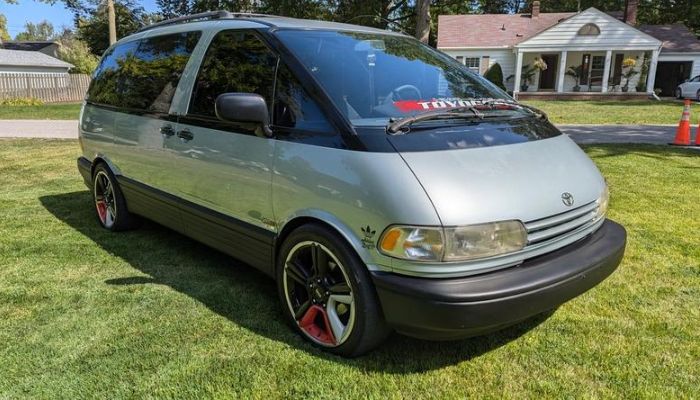
The placement of the Previa's engine under the front seats created a maintenance nightmare. The engineers at Toyota believed they could solve the problem by advancing the engine installation to a forward position. The engine that the engineers developed for the vehicle failed to deliver necessary power despite its advanced design.
1992 Toyota Paseo
Toyota developed the Paseo to fulfill the needs of young drivers who sought excitement during the 1990s. The vehicle lacked the necessary performance and distinctive character to compete with its sporty appearance, according to specific benchmarks established by competitors such as the Geo Storm and Nissan Pulsar. The Paseo experiment ended in 1997.
2000 Toyota Echo
This car becomes affordable to buyers because it lacks all basic features, which include power windows and air conditioning and power steering and power mirrors. The removal of essential features for drivers resulted in extreme outdatedness for the automobile. Toyota discovered through practical experience that budget-minded consumers would not give up their fundamental requirements.
2001 Toyota Camry Solara
Toyota attempted to make their dull Camry name more exciting, which received excitement. The 1MZ-FE 3.0L V6 engine required proper maintenance to avoid its common problem of oil sludge development. Engine problems developed from this buildup, which eventually resulted in engine failure.
2008 Toyota Yaris
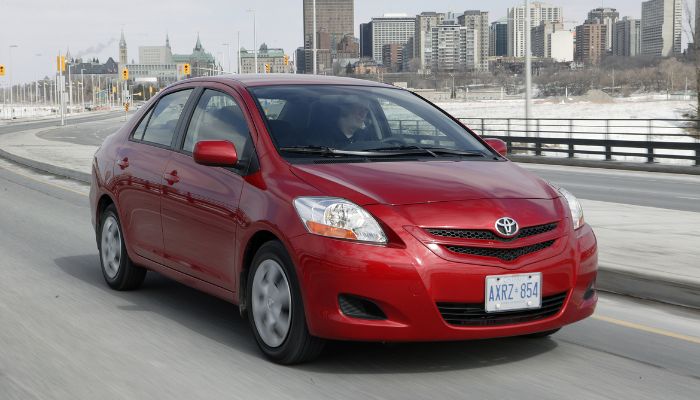
The cheap, brittle plastic interior of the Yaris betrayed its budget nature. Though you could add options to improve the experience, the price quickly ballooned, negating the car's main selling point. In 2010, Toyota recalled specific models, including the 2008 Yaris, due to potential issues with the accelerator pedal mechanism.
2012 Toyota Scion iQ
Everything about timing matters. The Scion iQ scheduled its arrival in the United States before Americans developed an interest in microcars. The vehicle experienced automatic transmission problems that caused it to change gears at the most inconvenient times. The system disabled essential power during critical moments when drivers needed to execute parking tasks. The current market supports small electric vehicles that succeed today, but the iQ failed because of its time period.
2012 Toyota Venza
The Scion XD, which included boxy design elements to appeal to young drivers, reached only 30 miles per gallon. The small car, which used a 1.8-liter engine, produced extremely poor fuel efficiency results. The package, which offered less space and showed average fuel efficiency results, failed to create an exciting experience.
2019 Toyota 86
The 86 came to life after a partnership between Toyota and Subaru. The vehicle features design elements that enable it to handle challenging street courses rather than just achieve high speed on straight paths. The car delivered outstanding rear-wheel drive performance, yet some people regarded it as the least impressive car in the athletic vehicle collection.
Toyota has experienced its share of product failures throughout its history. The company demonstrates its ability to create successful products through its collection of winning models.
Toyota Celica GT-Four
The bloodline of rally heritage exists within this WRC driver who became a legend. The homologation requirements originated the Celica GT-Four, which included advanced features such as an All-Trac All-Wheel Drive System and center and limited-slip rear differentials. The turbocharged four-cylinder engine produced more than 200 PS of power for most model versions, while the Super Strut Suspension system used during intense cornering allowed maximum tire contact.
A80 Toyota Supra
The 2JZ engine alone makes this car legendary. This icon excelled at handling double its factory 300 PS output without breaking a sweat. Toyota reduced its weight through aluminum and magnesium alloy usage and the implementation of hollow fibers in its carpets.
Toyota GT86
Bucking the horsepower wars required extreme bravery. The brand partnered with Subaru to develop authentic driving enjoyment through essential driving elements instead of pursuing performance metrics. The vehicle delivers its exceptional performance through its combination of low center of gravity rear-wheel drive system and limited-slip differential and its satisfying direct six-speed manual transmission. The process of sliding became simple because it resembled the basic learning method of ABCs.
250 Series Toyota Land Cruiser

The latest version of the Land Cruiser has become its most attractive model because of its fashionable vintage design. The 250 Series maintains superior off-road performance, which makes its competitors look less competent. The vehicle has developed better driving characteristics on streets that have become more effective throughout its operational period.
Conclusion
Toyota’s long automotive history proves that even the world’s most respected carmakers experience both successes and failures. Models like the Toyopet Crown, Paseo, and Scion iQ struggled because of poor performance, awkward design choices, or changing market demands.
At the same time, legendary vehicles such as the Supra, Celica GT-Four, GT86, and Land Cruiser helped establish Toyota’s reputation for durability, innovation, and driving excitement. Together, these cars show how Toyota evolved over the decades by learning from its weaker models while continuing to create vehicles that earned worldwide respect.