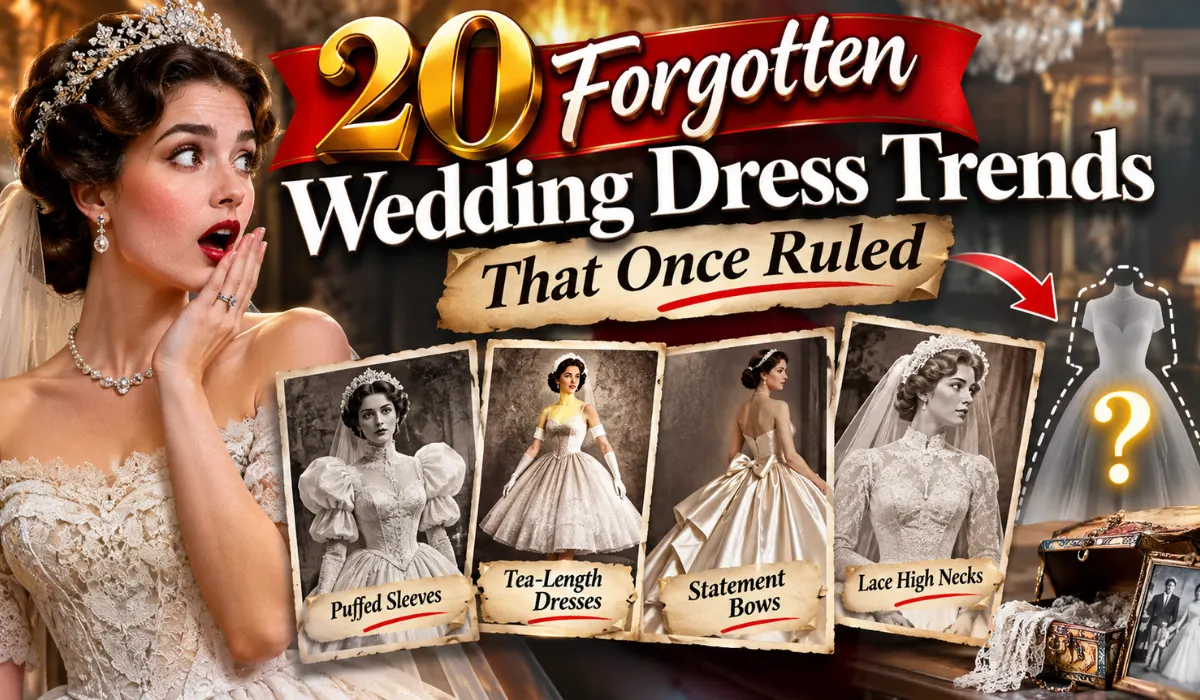
There was a time, not that long ago, when endless video clips of brides on Say Yes to the Dress hypnotized me. I could spend hours watching brides pity each other in their choices of ball gowns, mermaid and empire waist wedding dresses, sweetheart necklines, lace sleeves and arm cups, and dresses that ultimately cost more than my automobile. Though I clearly developed opinions about dresses I had no right to, I never really thought about how quickly the "must have" wedding dresses of the moment changed through the years. That is, if the bride liked them, of course! With that caveat aside, here are 20 wedding-dress trends brides were smitten with prior to 1960 - before anyone asked them if they were "saying yes to the dress!"
Before White, Brides Wore Their Best Dress
Before 1840, no bride wore a gown. Most women married in the best dress they owned – often a blue, gray, green, or brown dress – and wore that same dress to church and holidays for the rest of her life. For most people, it simply wasn't practical to buy a dress for one day.
Victoria Didn't Invent White, She Sold It
She married on 10 February 1840 in a white Spitalfields silk-satin gown with Honiton lace. But it had nothing to do with love and everything to do with encouraging British weavers and lacemakers. Photographers captured her gown in the papers and illustrated journals, and white became aspiration. She wasn't the first; Mary Queen of Scots married in white in 1558. Just that Victoria made it new.
Steel Cages Gave Brides Their Biggest Skirts Yet
In the 1850s and '60s, women traded their layers of bulky petticoats for a steel-caged crinoline, which gave their skirts a wide dome. It let their dresses billow out - away from the bride. Industrial metalworking finally came to the wedding dress!
Fashion Moved the Volume to the Back
By the 1870s and 1880s, fashion designers replaced the round crinoline with a bustle, which extended the rear of the skirt further out over a flatter, less "grand" looking front part of the skirt. Bell-shaped bustle dresses with their shaped frames covered with fabric (sometimes padding or wire frame) became the new "must have" fashion. Not necessarily the most comfortable or easiest to wear!
Puffed Sleeves and Wax Flowers Defined The 1890s
Wedding dress sleeves in the 1890s featured leg-of-mutton style - puffy, padded at the shoulder and tight down to the wrist, made of stiffened fabric or feathers. Around the 1830s to 1930s, brides could wear a band of wax orange blossoms on their heads - fake flowers imported from distant lands, which lasted much longer than the sleeves.
Poiret Took the Corset Out of Bridal Fashion
Between 1910 and 1918, designers made bridal dresses looser and lighter, with the empire waistline and sheer chiffon tunic of the gown worn over a silk slip, inspired by Parisian couturier Paul Poiret, who rejected the corset. A few brides wore a Juliet cap a fashionable lace or net skullcap borrowed from Shakespearean stage costumes.
Deco Beading and Cloche Hats Took Over the Altar
Designers embellished wedding dresses inspired by the 1925 Paris Exposition of Decorative Arts with metallic thread, shaped them into chevrons or sunbursts, and covered them in sunbursts and geometric shapes made of glass beads or sequins. The bride ditched her veil for a silk or satin cloche hat, which was stylish in the '20s because it fit to the head.
Depression Brides Bought Gowns They Could Redye
Given that importing silk was expensive during the Great Depression, textile manufacturers began to make a synthetic rayon called "art silk" so that frugal brides could buy cheap liquid satin dresses. Some brides forwent an ivory wedding dress and opted for white or ivory rayon in hopes of dying it that dark and using it as an evening gown (great hack here). Carrying arm-sheaves of calla lilies tied it all together.
American Brides Chose Suits, No One Made Them
Between 1940 and 1945, more and more American women married in practical wool or rayon suits and day dresses, rather than the traditional white gown. This was not compulsory, nor did anyone want it. Wartime fabric shortages, the time squeeze of military leave and thrift all contributed to making the suit and day dress an accepted option.
Britain Made Bridal Gowns Cost 11 Coupons
Before the end of the war, the Board of Trade decreed that all British brides had to give up around 11 coupons for a new wedding dress, out of an annual allocation which dwindled to a mere 24 by 1945. They had no options – they simply could not buy new wedding dresses. They had to wear suits or simply borrow.
FAQ's
What are some examples of forgotten wedding dress trends?
Historical favorites include Edwardian high lace collars, heavily beaded Juliet caps, 1950s tea-length skirts, and detachable overskirts that altered a gown's shape between the ceremony and reception.
Why did these vintage trends fade out of style?
Fashion naturally shifts toward opposing aesthetics, causing heavy fabrics, restrictive structures, and elaborate headwear to give way over time to lighter, more flexible modern alternatives.
Are any of these past trends making a modern comeback?
Yes, elements like dramatic bishop sleeves, dropped waists, and square necklines regularly cycle back into contemporary bridal collections with updated, lightweight fabrics.
Did brides always wear traditional white gowns?
No, white only became the global standard after Queen Victoria wore an ivory silk gown in 1840; prior to that, brides frequently wore their finest colored or black formal dresses.
How can a modern bride incorporate a forgotten trend?
Brides can weave historical charm into a modern wedding by adding removable vintage-style sleeves, wearing a retro heirloom headpiece, or opting for a playful tea-length hemline for the reception.