

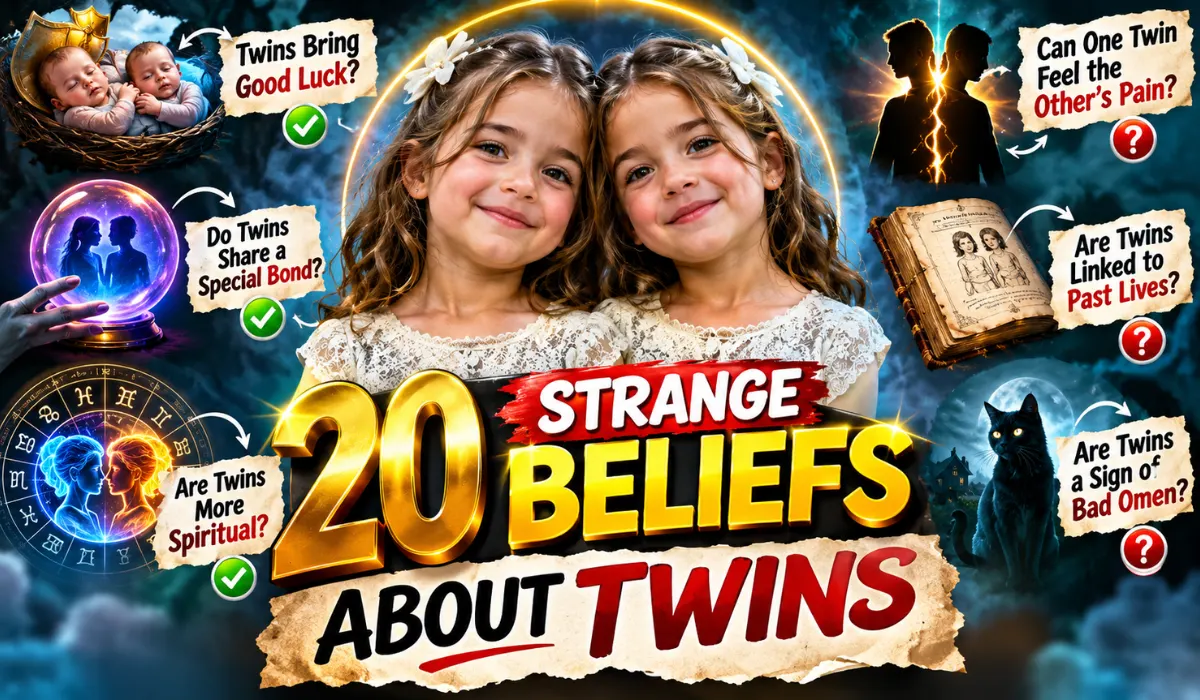
The earliest I recall encountering twins is in preschool, where two of my classmates formed a pair, and fifth-year-old me was wildly intrigued. I believed that having a doppelganger was one of the greatest occurrences that could happen to a human. If I had been born in a different land or era, that feeling would've felt closer to dread, as elsewhere and otherwise, people feared twins as a change of order and saw them as a dangerous fate as well as fodder for rituals made from carved figurines, corn beer, and other equally terrifying substances.
Margaret Of Henneberg's 365 Children Never Happened
Another legend from the Middle Ages states that a Dutch countess had 365 children in one day. The story takes place in 1276, when Countess Margaret of Henneberg snubbed a begging woman who had just given birth to a pair of twins, whereupon the beggar cursed her to give birth to as many children as there were days in a year. The legend became popular in the 16th and 17th centuries, and people associated it with a church in the town of Loosduinen. The legend is based on a false belief from history that twins could only have had two fathers, so their mothers would be called whorers. As if giving birth to one can't be hard enough!
Igbo Twins Were Once Left in The Evil Forest
In the eyes of some pre-colonial Igbo communities in modern-day southeastern Nigeria, the birth of twins was an ominous sign. They saw these children as aru, a crime against nature. People left babies born as twins in earthenware pots in the Evil Forest (Ojo Ogwu). This practice, which began to phase out between 1880 and 1920, resulted not from one brave woman-Scottish missionary Mary Slessor-but from decades of attack by her, indigenous converts, and colonial power.
The Nuer Believed Twins Were Sky Spirits
When British anthropologist E. E. Evans-Pritchard carried out research with the Nuer of South Sudan in the 1930s, he learned that the Nuer had a very different conception of twins. The Nuer viewed twins as "spirits of the above" or, in their own language, kuth nhial, spirits sent from the Spirit. They attributed twins to birds, gave them bird names, known as dit and assumed they belonged to the sky rather than to the human family; they even performed their own special mortuary rites for twins.
China Paid Rice Bonuses, But Never for Twins
Multiple births in the old imperial China could result in an official donation from the government, but there was a stipulation. The laws of the Qing Dynasty defined exactly what made a birth special enough to be sponsored. An imperial edict issued in 1663 and amended in 1674 offered five piculs of rice (a former weight measure) and 10 pieces of silk for three or more sons. Only triplets with the same gender qualified—twins and all-girl triplets did not.
Yoruba Families Carved Wooden Twins to Replace the Dead
Scottish Highland folk stories viewed twins, though. People thought twins had the power of Dà-shealladh, or Second Sight. Though they were a special gift, it could also become a dangerous one. To prevent a Sìdhe, or fairy, from kidnapping the little one and taking its place as a changeling, parents would leave an iron nail near their bed, sprinkle both children's beds with Rowan water, which was also a fairy protection, and have both children baptized together.
In West Africa, the Yoruba believed that twins had such a spiritual significance that the death of one of them would not end their existence in the family. The Yoruba (Ibeji) believed that twins shared a "single, unbreakable spirit," and when one died, the family created a carved object in the shape of the missing one and cared for it by washing it, anointing it with palm oil and camwood powder, and feeding it. The Yoruba had some of the highest twin rates ever recorded, with 45-50 sets of twins for every 1,000 births recorded in the 18th to 20th centuries.
Highland Scots Guarded Twins Against Fairy Swaps
Scottish Highland folk stories viewed twins, though. People thought twins had the power of Dà-shealladh, or Second Sight. Though they were a special gift, it could also become a dangerous one. To prevent a Sìdhe, or fairy, from kidnapping the little one and taking its place as a changeling, parents would leave an iron nail near their bed, sprinkle both children's beds with Rowan water, which was also a fairy protection, and have both children baptized together.
Maya Kings Traced Their Power to Two Mythic Twins
The story of Maya mythology that is perhaps best known is that of the hero twins, Hunahpu and Xbalanque. The hero twins beat the lord of the underworld at a game of ball, a story that scribed the K'iche' Maya book the Popol Vuh about 1550 CE (but the story is much older). Classic Maya kings (ruled from 250-900 CE) built stone ballcourts and made a connection between themselves and the hero twins. They performed the ballgame mythically when they assumed rulership and made offerings of the ballgame when they were crowned, and there is 3,000 years of art that references the ballgame.
FAQ's
Do identical twins have the exact same fingerprints?
No, while they share nearly identical DNA, their fingerprints differ because ridges form from physical movement and environmental contact inside the womb.
Can twins have different biological fathers?
Yes, through a rare occurrence called heteropaternal superfecundation where two separate eggs released in the same cycle are fertilized by sperm from different men.
Do twins create their own secret language?
Yes, roughly forty percent develop cryptophasia, a temporary shared communication system, because they learn speech together and spend all their time in close proximity.
What are mirror-image twins?
They are identical twins who display symmetrical traits, such as having birthmarks on opposite sides of their bodies or one being left-handed and the other right-handed.
Do twins really skip a generation?
This myth stems from the inherited hyperovulation gene, which can be passed from a father to his daughter, raising her likelihood of conceiving fraternal twins.