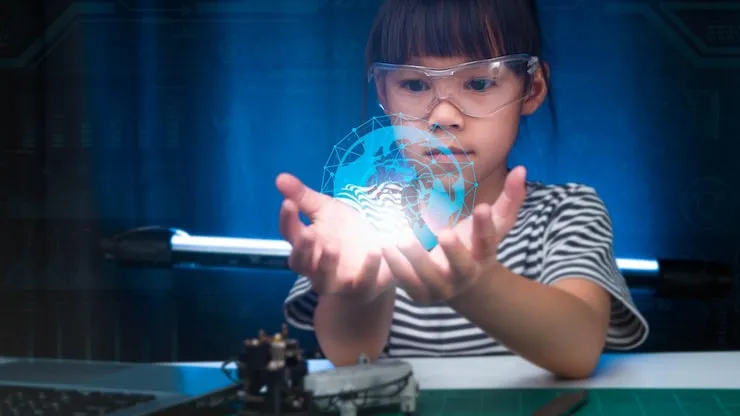
In a rapidly evolving world, preparing children for the future means equipping them with skills that go beyond traditional subjects. Science, Technology, Engineering, and Mathematics—collectively known as STEM—have emerged as the cornerstone of modern education, fostering critical thinking, problem-solving, and creativity. But STEM education itself is undergoing a revolutionary transformation, thanks to innovative teaching methods, interactive technologies, and hands-on experiences that are reshaping how children learn, explore, and thrive.
This transformation is more than a trend; it’s a life-changing shift that can significantly influence your child’s academic success, career prospects, and overall confidence. In this article, we’ll explore the revolutionary innovations in STEM education, why they matter, and how they can transform your child’s future.
The Importance of STEM Education
STEM education is no longer just an elective or an academic specialization—it’s a fundamental pathway to opportunities in the 21st-century world. Whether your child dreams of becoming a scientist, engineer, entrepreneur, or innovator, STEM provides the foundation for understanding and shaping the world.
Why STEM Matters
-
Fosters Problem-Solving Skills
STEM teaches children to analyze problems, think critically, and devise practical solutions. These skills are applicable not only in academics but in everyday life, encouraging children to approach challenges creatively. -
Encourages Innovation and Creativity
Through experimentation, coding, and engineering projects, children learn to imagine possibilities and bring ideas to life. STEM nurtures an entrepreneurial mindset that values curiosity and experimentation. -
Prepares for Future Careers
Jobs in technology, healthcare, engineering, and research are growing rapidly. STEM education equips children with skills that are in high demand, ensuring they remain competitive in the workforce. -
Boosts Confidence and Resilience
Hands-on STEM activities allow children to learn by doing, make mistakes, and improve. This experiential learning builds confidence and resilience—essential traits for personal and professional success.
Despite its importance, traditional STEM education can sometimes feel abstract or disconnected from real-world applications. That’s where the new wave of revolutionary STEM innovations comes into play.
What is Revolutionary STEM Education Innovation?
Revolutionary STEM education innovation refers to the integration of technology, creativity, and personalized learning into the STEM curriculum. This approach moves beyond rote memorization and passive learning to a more interactive, engaging, and transformative experience.
Key features include:
-
Hands-on learning experiences
-
Gamified education and coding platforms
-
Project-based and experiential learning
-
Artificial intelligence and adaptive learning technologies
-
Integration of real-world applications and interdisciplinary skills
These innovations are transforming how children engage with STEM, making learning not only educational but also exciting and meaningful.
Hands-On Learning: Making STEM Tangible
One of the most impactful innovations in STEM education is hands-on learning. Rather than simply reading about scientific concepts or memorizing equations, children actively experiment, create, and solve problems.
Benefits of Hands-On STEM Learning
-
Enhances Understanding: Concepts like physics, chemistry, and coding become tangible when children can manipulate materials or interact with simulations.
-
Encourages Curiosity: Exploration and experimentation spark questions and discoveries that deepen engagement.
-
Develops Critical Thinking: Hands-on projects require planning, testing, and iterative problem-solving.
Examples
-
Robotics Kits: Children can build and program robots, learning mechanics, coding, and logic through trial and error.
-
Science Experiments at Home or School: Simple experiments with everyday materials demonstrate chemistry and physics principles in action.
-
Engineering Challenges: Designing bridges, catapults, or simple machines cultivates engineering thinking and creativity.
Hands-on STEM activities not only teach knowledge—they create experiences that children remember and apply throughout their education.
Gamified Learning: Making STEM Fun
Gamification is another revolutionary innovation in STEM education. By integrating game-like elements such as points, challenges, and rewards, children become active participants in their learning journey.
Why Gamification Works
-
Motivates Engagement: Games tap into intrinsic motivation, making children excited to solve problems.
-
Provides Immediate Feedback: Interactive platforms give instant feedback, helping children learn from mistakes and improve.
-
Encourages Persistence: Challenges and levels encourage perseverance and resilience.
Examples
-
Coding Games: Platforms like Scratch or Tynker teach programming through interactive stories and games.
-
Math Challenges: Apps that turn math problems into puzzles or competitions enhance problem-solving skills.
-
Virtual Labs: Digital simulations allow students to conduct experiments safely, reinforcing scientific principles through play.
Gamified STEM education transforms learning into a dynamic, enjoyable experience, cultivating both knowledge and a love for problem-solving.
Project-Based and Experiential Learning: Real-World Applications
Project-based learning (PBL) is revolutionizing STEM by connecting classroom knowledge to real-world challenges. Instead of abstract assignments, students work on meaningful projects that require research, collaboration, and creativity.
Benefits of PBL in STEM
-
Builds Collaboration Skills: Students often work in teams, learning communication and leadership.
-
Promotes Creativity and Innovation: Projects require unique solutions, encouraging divergent thinking.
-
Connects Learning to Life: Students see the relevance of STEM concepts in everyday life and future careers.
Examples
-
Environmental Science Projects: Students analyze local ecosystems, measure pollution levels, and propose solutions.
-
Engineering Design Challenges: Creating functional prototypes for real-world problems teaches engineering principles.
-
Tech and App Development: Designing apps or websites for community needs introduces coding, design thinking, and user experience.
Experiential learning ensures that STEM education is not only about knowledge but also about meaningful impact, preparing children to apply skills in real-world scenarios.
AI and Adaptive Learning: Personalized STEM Education
Artificial intelligence (AI) and adaptive learning technologies are transforming STEM education by tailoring instruction to each child’s needs. These platforms analyze student performance, identify strengths and weaknesses, and adjust content accordingly.
Advantages
-
Individualized Learning Paths: Every student progresses at their own pace, receiving targeted support where needed.
-
Data-Driven Insights: Teachers and parents can track progress, identify gaps, and intervene proactively.
-
Engagement and Motivation: Personalized challenges and feedback keep children motivated and invested.
Examples
-
Math and Science Apps: AI-powered platforms provide adaptive problem sets that match the child’s skill level.
-
Coding Tutors: Intelligent systems guide students through coding exercises, suggesting improvements and offering hints.
-
Virtual Labs and Simulations: AI-driven experiments adapt to student choices, creating a customized learning experience.
By leveraging AI, STEM education becomes more inclusive, effective, and empowering, ensuring that every child can thrive.
Interdisciplinary Learning: Bridging STEM and Life Skills
Modern STEM education innovation emphasizes interdisciplinary learning, connecting STEM concepts with arts, humanities, and social sciences. This approach cultivates holistic thinking and prepares children for complex, real-world problems.
Benefits
-
Enhances Creativity: Integrating arts and design encourages innovative thinking.
-
Develops Problem-Solving Skills: Interdisciplinary projects require critical thinking and adaptability.
-
Prepares for Future Challenges: Real-world issues like climate change, healthcare, and technology ethics require knowledge from multiple fields.
Examples
-
STEAM Projects (Science, Technology, Engineering, Arts, Mathematics): Students design interactive exhibits, combining engineering with visual storytelling.
-
Data-Driven Social Studies: Analyzing population trends or environmental data combines math, science, and social awareness.
-
Robotics Competitions with Design Elements: Students build functional robots while designing visually appealing and user-friendly interfaces.
This interdisciplinary approach ensures that STEM education prepares children not just for careers but for life, encouraging curiosity, empathy, and innovation.
The Role of Parents and Educators
While technology and innovation are crucial, the support of parents and educators is equally important. Encouraging curiosity, providing resources, and creating opportunities for hands-on exploration can amplify the impact of STEM education.
How Parents Can Support
-
Encourage exploration through science kits, coding apps, and STEM toys.
-
Participate in experiments and projects together, making learning fun.
-
Celebrate mistakes as learning opportunities, fostering resilience.
How Educators Can Innovate
-
Incorporate project-based learning and real-world problem-solving in the curriculum.
-
Use technology to personalize lessons and engage students.
-
Create collaborative and inclusive environments where curiosity thrives.
By working together, parents and educators can maximize the benefits of revolutionary STEM education.
Real-Life Impact: Transforming Futures
The results of innovative STEM education are tangible. Students who engage in hands-on, gamified, and interdisciplinary STEM learning often demonstrate:
-
Higher academic performance in math and science
-
Increased confidence in problem-solving and critical thinking
-
Greater interest in STEM careers, including engineering, medicine, and technology
-
Stronger collaboration, communication, and leadership skills
Consider the story of a young student who began coding through a gamified platform at age ten. By high school, she had developed an app that helped local businesses track inventory. Today, she’s pursuing a degree in computer science and inspiring other students to explore technology. Stories like these show the transformative power of modern STEM education.
Why Now is the Time to Embrace STEM Innovation
The world is changing faster than ever. Automation, artificial intelligence, and global challenges require a workforce that can think critically, adapt quickly, and innovate continuously. Early exposure to revolutionary STEM education gives children the skills, mindset, and confidence to thrive in this environment.
By investing in innovative STEM learning today, you are preparing your child for a future of limitless possibilities—a future where they can lead, invent, and make meaningful contributions to society.
Conclusion: Unlock Your Child’s Potential
Revolutionary STEM education innovation is not just a new teaching method—it’s a paradigm shift that empowers children to explore, create, and excel. From hands-on learning and gamification to AI-driven personalized education and interdisciplinary projects, these innovations transform the way children engage with science, technology, engineering, and mathematics.
The benefits are clear: higher academic achievement, enhanced creativity, confidence, resilience, and preparation for future careers. Most importantly, STEM education inspires curiosity, nurtures problem-solving skills, and cultivates a love of learning that can last a lifetime.
By embracing these innovations, parents and educators can unlock a child’s full potential, setting them on a path toward a future filled with opportunities, growth, and discovery. The time to invest in your child’s future is now—through revolutionary STEM education, you can empower them to dream bigger, think smarter, and achieve more than ever before.