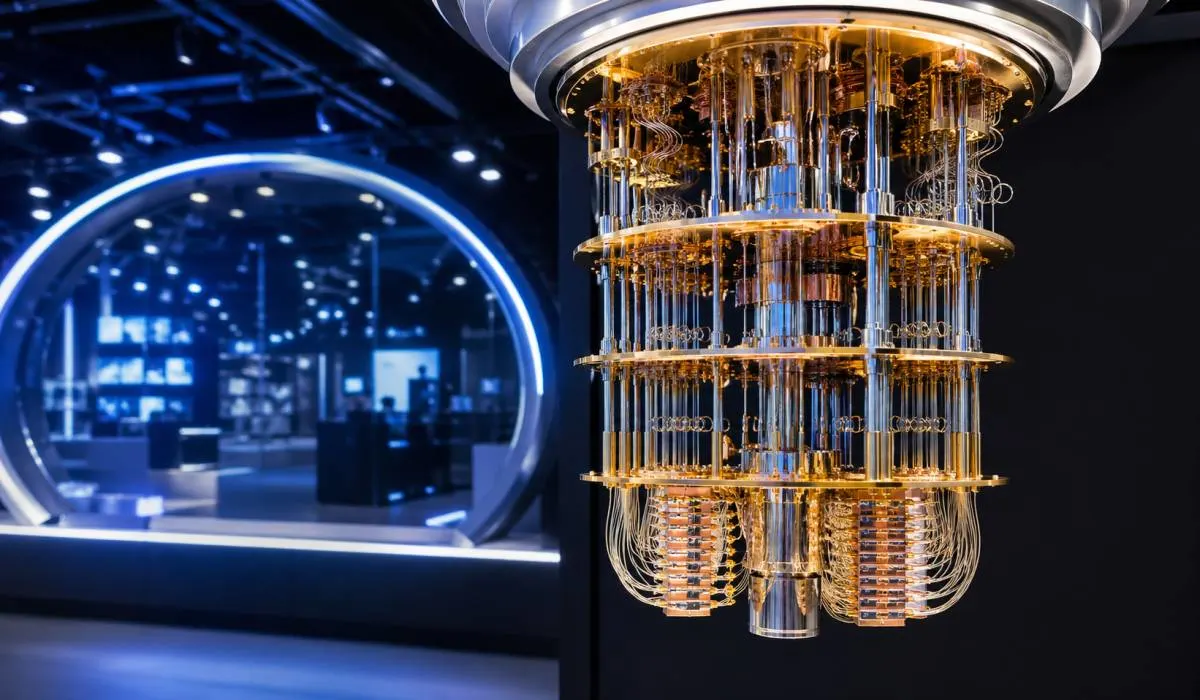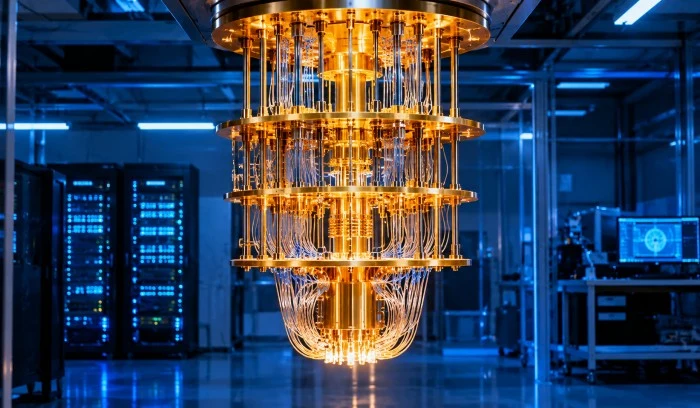
Quantum computing is moving from theory to reality. Real breakthroughs are happening in 2026. This article explains quantum computer features and benefits in plain words. We cover superposition, entanglement, interference, and exponential scaling. We look at advantages like faster drug discovery, better materials, and stronger security.
Most importantly, we cover what quantum computers have actually solved. Google's Willow chip ran an algorithm 13,000 times faster than a supercomputer. Researchers simulated magnets with 74 atoms. Indian scientists beat a supercomputer on a physics problem. These are not theories. They are real results. The technology is not mainstream yet. But the foundation is being built.
What Is Quantum Computing with Example?
- A regular computer uses bits. A bit is either 0 or 1. A quantum computer uses qubits. A qubit can be 0, 1, or both at the same time .
- Simple example: Imagine a coin. A regular bit is either heads or tails. A qubit is a spinning coin. While spinning, it is kind of both. That is superposition .
- Quantum computers also use entanglement. Two qubits can be linked. Change one, and the other changes instantly. Even if they are far apart .
These two features let quantum computers process many possibilities at once. That is the power.
Read More: Latest Developments in Quantum Computing 2026: India Trends

Key Features of Quantum Computers
1. Superposition: Multiple States at Once
A qubit can be in a mix of 0 and 1. This lets quantum computers explore many solutions simultaneously .
2. Entanglement: Linked Qubits
Qubits can be connected in ways regular bits cannot. This enables coordinated calculations across the system .
3. Interference: Boosting Right Answers
Quantum algorithms use wave interference. Correct answers get amplified. Wrong answers cancel out .
4. Exponential Scaling
Adding qubits adds power exponentially. Two qubits represent four states. Ten qubits represent over a thousand. The scaling is massive .
5. Qubit Fragility
Qubits are delicate. Heat, vibration, and noise cause errors. This is the biggest challenge .
Advantages of Quantum Computing
- Speed for specific problems: Quantum computers can solve certain problems exponentially faster than classical computers .
- Drug discovery: Simulating molecules accurately could speed up new medicine development .
- Material science: Designing new materials for batteries, superconductors, and more .
- Optimization: Solving complex logistics and supply chain problems .
- Cryptography: Creating unbreakable encryption. Also breaking current encryption .
- AI acceleration: Quantum machine learning could improve pattern recognition and data analysis .
What Has Quantum Computing Solved?
This is the important part. Real progress is happening now.
Quantum Advantage Demonstrated
Google's Willow chip ran a verifiable algorithm called Quantum Echoes. It was 13,000 times faster than the best classical supercomputer for a specific task . This was the first time a quantum computer ran a verifiable algorithm that surpassed supercomputers.
Simulating Quantum Magnets
Researchers at Qedma used an IBM quantum computer to simulate quantum magnets with 51 and 74 atoms. Classical computers failed. They ran out of memory or became too slow. The quantum computer kept going .
Hepatitis D Virus Genome
Researchers encoded and analyzed the entire genome of the hepatitis D virus on IBM quantum hardware. This was done using hybrid quantum-classical methods .
Protein Complex Simulation
The Quantum for Bio challenge showed hybrid methods can simulate protein complexes over 12,000 atoms. This is the largest known simulation of biologically meaningful molecules .
Indian Research Breakthrough
A team from BITS Pilani and IBM Research created a quantum algorithm for simulating the strong nuclear force. On a 120-qubit IBM processor, a 20-second quantum simulation beat a classical supercomputer that needed about two hours. IBM selected this algorithm for its Quantum Advantage Tracker .
Molecular Geometry
Google's Quantum Echoes algorithm measured molecular structures. It matched traditional NMR results and revealed information not usually available .
You May Also Read: How Much Do Quantum Computers Cost in 2026? Pricing Guide

Potential of Quantum Computing
The potential is huge. But it is not here yet for most applications.
- Drug discovery: Quantum computers could simulate molecular interactions perfectly. This could cut years off drug development .
- Materials: Designing better superconductors, batteries, and catalysts .
- Finance: Portfolio optimization, risk analysis, and fraud detection .
- Logistics: Route optimization and supply chain management .
- Climate: Better weather prediction and climate modeling .
- Security: Post-quantum cryptography to protect data from future quantum attacks .
The Bottom Line
Quantum computers use superposition and entanglement to solve problems classical computers cannot. The features are real. The benefits are promising. And in 2026, actual breakthroughs are happening. Google, IBM, and Indian researchers have demonstrated quantum advantage on real problems.
The technology is moving from lab to application. It is not mainstream yet. But the foundation is being built. The potential is enormous.
FAQs
1. What is quantum computing in simple words?
Normal computers use bits. A bit is 0 or 1. Quantum computers use qubits. A qubit can be 0, 1, or both. Like a spinning coin. Heads and tails until it stops.
2. Main features of quantum computers?
Superposition. Entanglement. Interference. Exponential scaling. Qubit fragility. Those five things make them different.
3. Advantages of quantum computing?
Speed on certain problems. Drug discovery. Materials. Optimization. Security. AI. For some tasks they are exponentially faster.
4. What has quantum computing solved?
Google ran an algorithm 13,000 times faster than a supercomputer. Researchers simulated magnets with 74 atoms. Analyzed the hepatitis D virus. Indian scientists beat a supercomputer on a physics problem. Real results.
5. What is quantum advantage?
When a quantum computer beats the best classical computer at something. Google proved it with Quantum Echoes. 13,000 times faster. Verifiable.
6. What is superposition?
A qubit can be both 0 and 1. Not one or the other. Both. This lets it try many answers at once.
7. What is entanglement?
Two qubits linked together. Change one, the other changes too. Instantly. No matter the distance.
8. Why are qubits fragile?
Heat. Sound. Vibration. Anything messes them up. Most need to be near absolute zero. That is the hard part.
9. What is the potential?
Faster drug discovery. Better batteries. Finance. Climate. Security. Huge potential. But not ready for most things yet.
10. Can I use one now?
Yes. Through the cloud. IBM and Google offer access. Mostly for researchers. Not for daily business yet. Moving fast though.