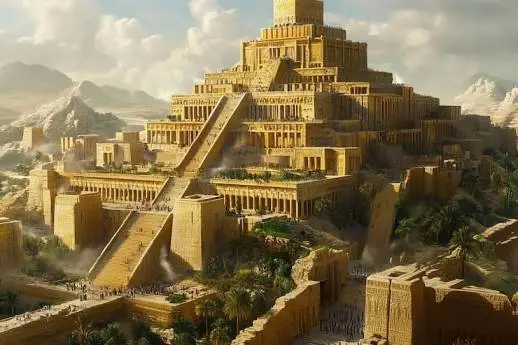
Most people know about the ancient cultures of Egypt and Greece and Rome. The general public does not know about these interesting ancient civilizations which are now lost to time except for historians and archeologists.
Explore 9 Hidden Gems of Ancient Civilizations
Kush:
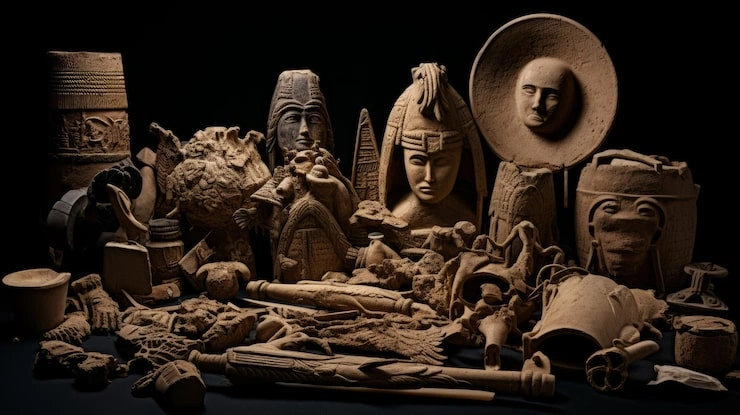
The origins of Kush date as far back as 8000 BCE, evidenced by ceramic artifacts found near its capital, Kerma. Kush operated as a complex urban society which existed in southern Nubia of northeastern Africa and depended on extensive agricultural production. The Kushite rulers revitalized the erection of the pyramids, fostering their construction throughout Sudan. Their unique script, called Meroitic, as well as their demise, is still a mystery.
Yam:
The exact location of the African kingdom of Yam remains a mystery. Several Egyptian texts from the Old Kingdom period serve as the sole sources of information about this ancient civilization. The scholars study a tomb inscription named the Autobiography of Hark Huf who lived during the sixth dynasty between 2345 BCE and 2181 BCE his tomb exists among the Tombs of the Nobles for evidence about his burial site. The newly found hieroglyphs which researchers discovered more than 700 kilometers southwest of the Nile River prove that trade existed between Yam and Egypt while they indicate that Yam occupied a position in the northern highlands of Chad.
Read: Fascinating Facts About Ancient Civilizations You Probably Didn’t Know
The Xiongnu Empire:
At the end of the third century BCE, nomadic pastoral peoples who inhabited the eastern Asian Steppe formed a tribal confederation of fierce warriors who fought on horseback. The Xiongnu controlled Central Asia for more than 500 years because their territory extended throughout most of present-day Siberia and Mongolia. China had to explore and conquer its entire northern territory because of its wars against the Xiongnu which attacked from the northern front. Fun fact: the small kingdoms of northern China started constructing what is now the Great Wall because of the Xiongnu's continuous invasions.
Aksum:
The Aksumite kingdom derived its power from its control of trade routes which connected its northern Ethiopian territory to other areas. The Aksumite kingdom reached its maximum expansion between the third century and sixth century CE when it controlled all trade routes from the Nile River to the Red Sea in northeastern Africa. Aksum adopted Christianity in the fourth century but the kingdom lost its power when Persians and Arabs conquered its trading areas.
Yuezhi:
The Yuezhi were an ancient people who ruled Bactria and India from roughly 128 B to 450 CE. The Yuezhi started as nomadic tribes in northern China who traded jade and silk and horses across a vast area until their activities led to conflicts with the Xiongnu. The Yuezhi managed to conquer the Greco-Bactrians after their westward movement to achieve this victory. The Yuezhi developed a permanent farming economy while their missionaries spread Buddhism throughout China.
The Mitanni Kingdom:
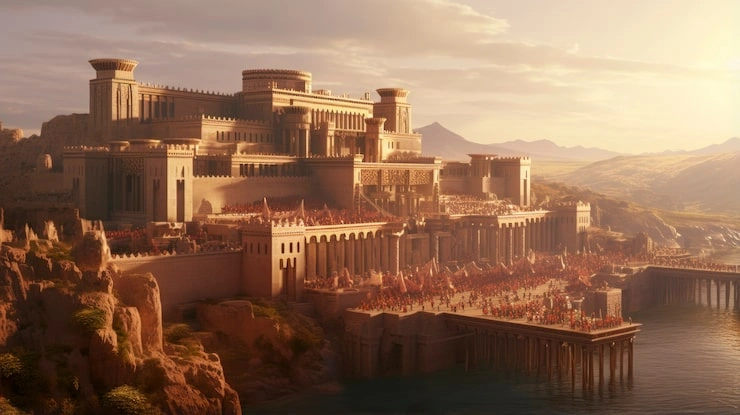
The Indo-Aryan kingdom of Mitanni existed from 16th to 13th century BCE in the territory which today constitutes Syria and northern Iraq and southeastern Turkey. The researchers hypothesize that the group practiced Hinduism through their beliefs in karma and reincarnation and their use of cremation. The Mitanni attained their greatest strength during one period when their empire expanded because the Old Babylonian Empire entered its decline phase. The Assyrians destroyed most of their historical records which resulted in the loss of their entire history. Egypt maintained friendly diplomatic ties with the Mitanni during their peak power because of the letters which show the Mitanni a king corresponded with the Egyptian pharaoh.
Tuwana (or Tyana):
The ancient city of Tuwana existed during the Hittite Empire period and developed its location in present-day Turkey at a key position on a fertile plain. The small state functioned as a bridge that connected East and West, which enabled the movement of goods and cultural exchange between these two regions. The kingdom selected the Phoenician alphabet as its writing system because Tuwana may have served as the route through which this script reached Greece.
You May Also Like: Historical Figures Who Died in Bizarre Circumstances
Mauryan Empire:
The Mauryan Empire in ancient India existed from 321 BCE until 185 BCE. Chandragupta Maurya founded the Mauryan dynasty after Alexander the Great died, which extended its realm across most of the Indian subcontinent. The empire operated as a structured autocratic system which maintained both military forces and administrative personnel. The first pan-Indian empire existed until 185 BCE when a coup divided India and permitted Greek forces to invade.
The Indo-Greek Kingdom:
The Indo-Greek Kingdom which ruled through multiple Hellenic and Hellenistic monarchs controlled most of northern India from 190 BCE until 10 CE. The Indo-Greek kings established their rule through the combination of Greek and Indian languages and symbols while they created a religious system that unified Greek Hindu and Buddhist beliefs. The Indo-Greeks vanished as a result of the Indo-Scythian invasion which resulted in their complete destruction.