Language didn’t just show up one day out of nowhere. Way before words or writing existed, people got by using gestures, sounds, and whatever they could come up with. Imagine pointing at a deer, making some rough animal noises, and acting out a hunt — that was enough to get the message across.
And honestly, it worked.But at some point, things began to shift. Those basic sounds slowly turned into patterns. Patterns became structured speech. And eventually, full-fledged languages were born — some of which have survived thousands of years and are still influencing the way we speak today.
Here are some of the oldest languages in the world — and trust me, their stories are way more interesting than you’d expect.
Discover the 8 Oldest Languages in the World and Their Historical Origins
1. Sumerian — c. 5000 years old
Dating back to 3500 BCE, it’s the earliest recorded written language in human history. The first proof? The Kish Tablet — a simple limestone artifact with inscriptions. It was widely used in ancient Mesopotamia for everything from administration to literature.
Even after Akkadian replaced it in everyday speech, Sumerian didn’t fade away completely. It continued to be used in religious and academic texts for generations.
You may also read :- People Hate Ernest Hemingway And 10 Reasons They Love Him
2. Egyptian — c. 4700 years old
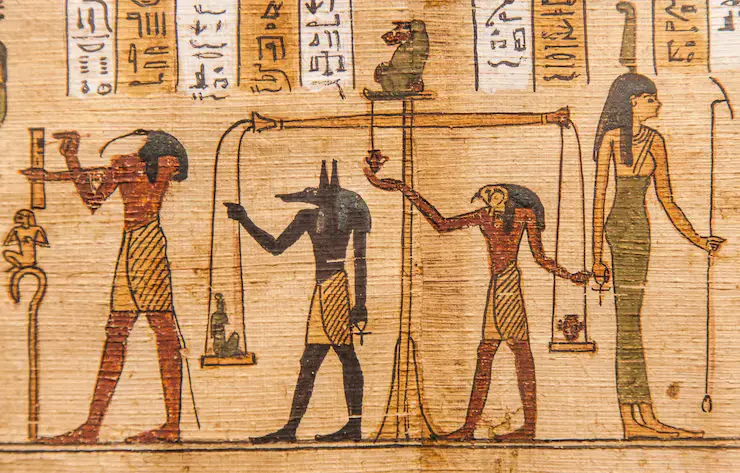
Ancient Egyptian goes way, way back — somewhere around 2600 BCE. It was written using hieroglyphics, those detailed symbols you’ve probably seen carved into temple walls or old monuments. Now here’s the part that’s kind of weird.
We can actually read a lot of these texts today… but we don’t really know how the language sounded when people spoke it. The reason? Egyptians didn’t write down vowel sounds. So while the meaning is clear, the pronunciation is mostly guesswork.
Over time, the language slowly shifted into Coptic, which still shows up in some religious settings even today. But as something people used in everyday conversation, ancient Egyptian faded out a long time ago. Still, you’ve got to admit — the writing system alone is enough to keep it alive in a different way.
3. Sanskrit — Over 3,500 Years Old
Sanskrit isn’t just a language — it’s a foundation. Used in Hinduism, Buddhism, and Jainism, Sanskrit is considered the oldest Indo-European language. Its earliest records come from the Rigveda, written during the second millennium BCE.
What makes Sanskrit fascinating is its precision. The grammar is so structured and systematic that even modern linguists admire its design.
You’ve probably noticed this without realizing it — many English words, especially in science and philosophy, have roots in Sanskrit.
And while it’s not widely spoken today, it hasn’t disappeared either. Around 25,000 people in India still speak it as their first language, and organizations continue to work on reviving it.
4. Aramaic — c. 3000 years old
Aramaic is one of those languages you don’t hear about often — but it has had a massive impact. It originated in ancient Syria and became widely used across the Middle East. Over time, it influenced the development of both Hebrew and Arabic scripts. At one point, Aramaic was the lingua franca of entire empires.
Even today, it hasn’t completely disappeared. Different communities — including Christian, Jewish, and Mandaean groups — still speak modern versions of Aramaic. Some churches even continue to use ancient dialects in religious practices. That kind of survival is rare.
5. Tamil — c. 2300 years old

Tamil is often called one of the oldest living languages in the world — and for good reason. Spoken by over 70 million people today, it’s an official language in Sri Lanka, Singapore, and parts of India. But what really makes Tamil special isn’t just its age — it’s its continuity.
Here’s the thing: Tamil hasn’t just survived — it has evolved while still holding on to its roots. Its earliest known literature, the Sangam texts, dates back to around 300 BCE. That’s over two millennia of recorded history. And unlike many ancient languages, Tamil is still used in everyday conversation, media, and education. Not many languages can claim that kind of legacy.
6. Chinese — Over 3,000 Years Old
Chinese goes back further than most languages still in use today. Its writing system dates to around 1250 BCE, during the Shang Dynasty — and it hasn’t disappeared. Today, over a billion people speak it, mainly Mandarin. But it’s actually made up of multiple dialects like Cantonese, Wu, and Hakka.
Even with those differences, they all come from the same origin: Old Chinese. What’s impressive is how it has adapted over time while still staying recognizable — something very few languages have managed to do.
7. Greek — Over 3,400 Years Old
Greek goes back to the time of some of the most well-known philosophers ever. Socrates. Plato. Aristotle. Dating to around 1450 BCE, it shaped early ideas in philosophy, science, and politics. Over time, it evolved into Modern Greek, which is still spoken today by millions.
And the funny part? You’re probably already using Greek without knowing it — especially in scientific or academic terms.
8. Hebrew — Over 3,000 Years Old
Hebrew has one of the most incredible comeback stories in history. It was widely spoken over 3,000 years ago but eventually faded from daily use around 200 CE. For centuries, it survived mainly as a religious language. Then something unusual happened.
In the 19th and 20th centuries, Hebrew was revived — not just as a symbolic language, but as a fully functional, spoken one. Today, it’s the official language of Israel.
Let that sink in. A language that was once considered “dead” came back to life and is now used in everyday conversations, schools, and media. That’s something no other language has achieved at this scale.
Final Thoughts
Here’s the thing — languages are more than just words. They carry history, culture, identity, and stories that go back thousands of years. Some evolve and survive. Others fade away but leave behind traces that shape modern communication.
And when you look at these ancient languages, you start to realize something interesting: We’re still connected to them. Whether it’s through the words we use, the scripts we write, or the ideas we share — the past is never really gone.
So next time you speak, write, or even text… just remember, you’re part of a story that started thousands of years ago.