The last time you grabbed a chocolate chip cookie… or checked your phone before answering a call — it felt routine, almost automatic. Nothing special, right? But here’s the funny part: those tiny, everyday actions? They exist because someone got mildly frustrated and decided, “nah, this can be better.” And more often than not, that “someone” was a woman.
Now, to be fair, history hasn’t exactly done a great job telling these stories. We keep hearing the same names — Edison, Ford, Bell — like a broken playlist. Meanwhile, a lot of the stuff we actually use daily came from women who were working quietly in the background.
No big funding. No hype. Just problem → solution. What makes it hit harder in 2026 is this: women are building more, launching startups, stepping into tech and science like never before. So these stories don’t feel old. They feel… familiar. Anyway, let’s get into it.
1. Chocolate Chip Cookies: Ruth’s Happy Accident
Here’s the kicker — chocolate chip cookies weren’t even planned. Ruth Wakefield wasn’t trying to invent anything. She was just doing her job… baking. Back in the 1930s at her Toll House Inn, she had a reputation. People showed up specifically for her desserts. So yeah, expectations were high.
Then one day, she ran out of baker’s chocolate. Now most people would’ve just stopped there. Not her. She grabbed a Nestlé chocolate bar, chopped it up, and tossed it into the dough. The idea? It’ll melt. It always melts. Except… it didn’t.
The chunks stayed. Soft, gooey, slightly melted — but still there. And weirdly enough, that’s what made the cookies better. Her assistant tried them first. Then the guests. And just like that, word spread.
Next thing you know, Nestlé is knocking. They make a deal — recipe in exchange for a lifetime supply of chocolate. Honestly? Not a bad trade at all. Today, chocolate chip cookies are everywhere. But the truth is, they exist because someone improvised instead of quitting mid-recipe.
2. Modern Electric Refrigerator: Florence Parpart’s Cool Upgrade
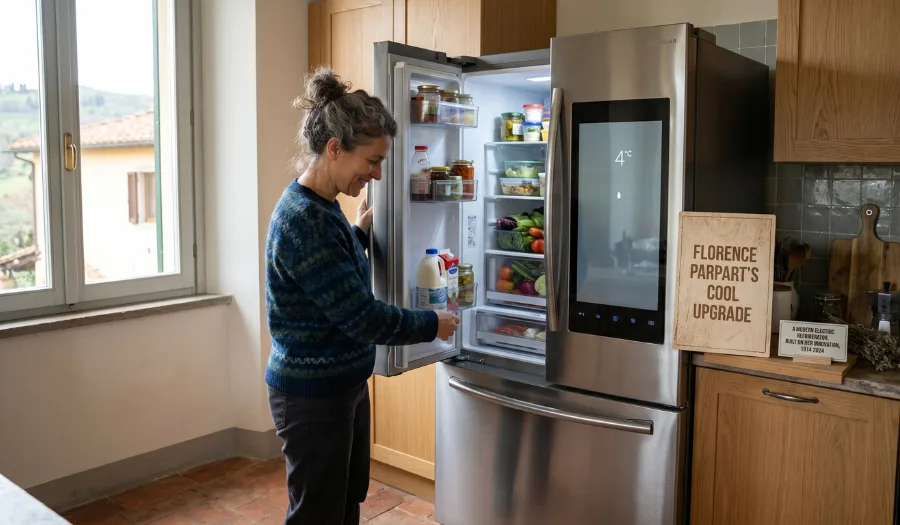
Before refrigerators, kitchens were… messy. Iceboxes, melting blocks, constant refills. It was a chore. Then came Florence Parpart — and she basically said, “we can do better.” In 1914, she patented an electric refrigerator. No ice. No daily hassle. Just consistent cooling.
Now here’s what people don’t talk about enough — she didn’t just invent it, she sold it. Trade shows, marketing, production… she handled all of it. And slowly, iceboxes became irrelevant. By the 1920s, refrigerators were becoming normal in homes. Food lasted longer. Waste dropped. Life got easier. Simple idea. Massive impact.
3. Rotating Globe: Making the Earth Make Sense
Flat maps are confusing. Let’s be honest. Back in the 1800s, students struggled to understand things like seasons or how the Earth actually moves. It just didn’t click.
That’s where Ellen Eliza Fitz stepped in. She created a rotating globe system in 1875 that showed sunlight, day-night cycles, even seasonal shifts. Suddenly, geography wasn’t just theory — it was visible. And once people saw it, they got it. Her model was even showcased at the Philadelphia Centennial Exhibition. Not bad for something built to help kids learn better.
4. Hairbrush Upgrade: Lyda Newman’s Practical Fix
Let’s talk about something super basic — hairbrushes. Old ones? Kind of gross. Animal bristles, hard to clean, not great for all hair types. Lyda Newman looked at that and thought, “this needs fixing.” In 1898, she designed a brush with synthetic bristles and a back compartment that opened up for easy cleaning.
Simple tweak. Huge difference. It made brushes more hygienic, more affordable, and more inclusive for different hair textures. Honestly, this is one of those inventions you don’t think about… until you realize how annoying the old version must’ve been.
5. Laserphaco Probe: Restoring Vision
Some inventions don’t just improve life — they change it completely. Patricia Bath saw how cataracts were affecting people, especially in underserved communities. Surgeries were complicated, risky, and not always accessible.
So she created the Laserphaco Probe in 1986. It uses laser precision to remove cataracts quickly and safely. Less pain. Faster recovery. Millions of people can see today because of that one breakthrough. That’s not innovation. That’s impact.
6. Caller ID: The Reason You Screen Calls
Ever ignored a call because you didn’t recognize the number? You can thank Shirley Ann Jackson for that. Her research at Bell Labs in the 1970s laid the groundwork for caller ID, call waiting, and even fiber optics. No, she didn’t patent “caller ID” directly. But without her work, it wouldn’t exist. Kind of wild how something so technical turned into something so everyday.
7. Space Batteries: Powering the Impossible
Space isn’t forgiving. When the sun disappears, things still need to work. That’s where Olga González-Sanabria comes in. She developed long-lasting nickel-hydrogen batteries for NASA. These power satellites, space telescopes, even parts of the ISS. Think about that. Her work literally keeps things alive in space. No big deal.
8. Phone Switching Software: Fixing Network Chaos
Remember when networks used to crash during peak hours? Yeah — that was a real problem. Erna Schneider Hoover solved it with a software-based system that managed call traffic intelligently. Instead of chaos, the system prioritized important calls and kept everything running smoothly. Today’s telecom networks? Still built on that idea.
9. Safer Curling Iron: Theora Stephens’ Upgrade
Hair styling used to be risky business. Burns, uneven heat… not ideal. Theora Stephens knew this firsthand as a hairstylist. So she designed a curling iron that distributed heat evenly and reduced damage. Nothing flashy. Just… better design. And honestly, that’s what most great inventions are.
10. Science Fiction: Mary Shelley’s Big Idea
This one’s different. Mary Shelley didn’t invent a gadget — she invented a genre. Her 1818 novel Frankenstein wasn’t just a horror story. It was a warning about unchecked ambition and scientific power. And look around today — AI debates, ethical tech, dystopian futures. She saw it coming. At 18. Let that sink in.
Why This Still Matters
These inventions aren’t just “cool history facts.” They’re still shaping how we live. From the food we eat to the way we communicate… even how we explore space. And here’s something worth noting — women still hold a relatively small percentage of patents globally. That’s changing, slowly but surely. Which means the next big everyday invention? Could come from someone reading this right now.
A Few More Names You Should Know
Quick shoutout, because this list barely scratches the surface:
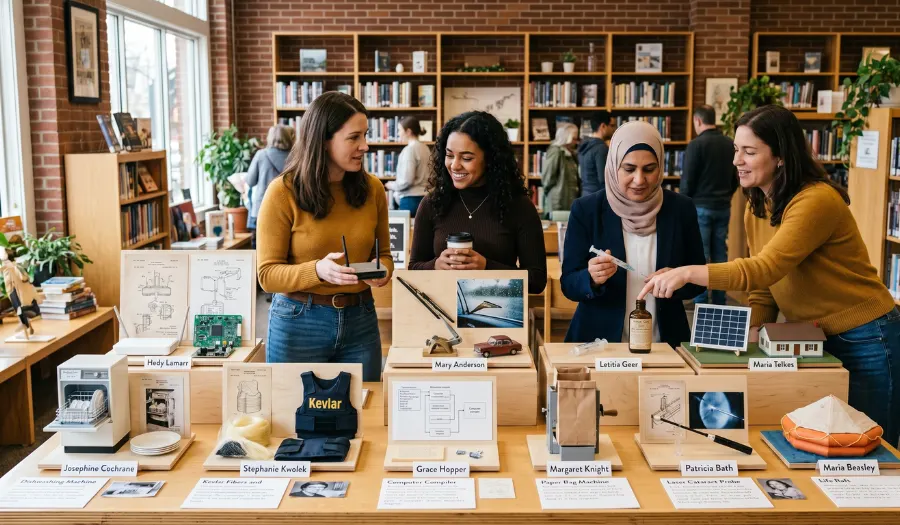
- Hedy Lamarr — helped make Wi-Fi possible
- Josephine Cochrane — yes, the dishwasher
- Grace Hopper — early programming pioneer
- Stephanie Kwolek — invented Kevlar
Different fields. Same pattern — solve a problem, change everything.
Final Thought
If there’s one thing these stories prove, it’s this: Big innovations don’t always start big. Sometimes, it’s just someone in a kitchen… or a lab… or a classroom thinking, “this is annoying — I can fix it.” And then actually doing it.