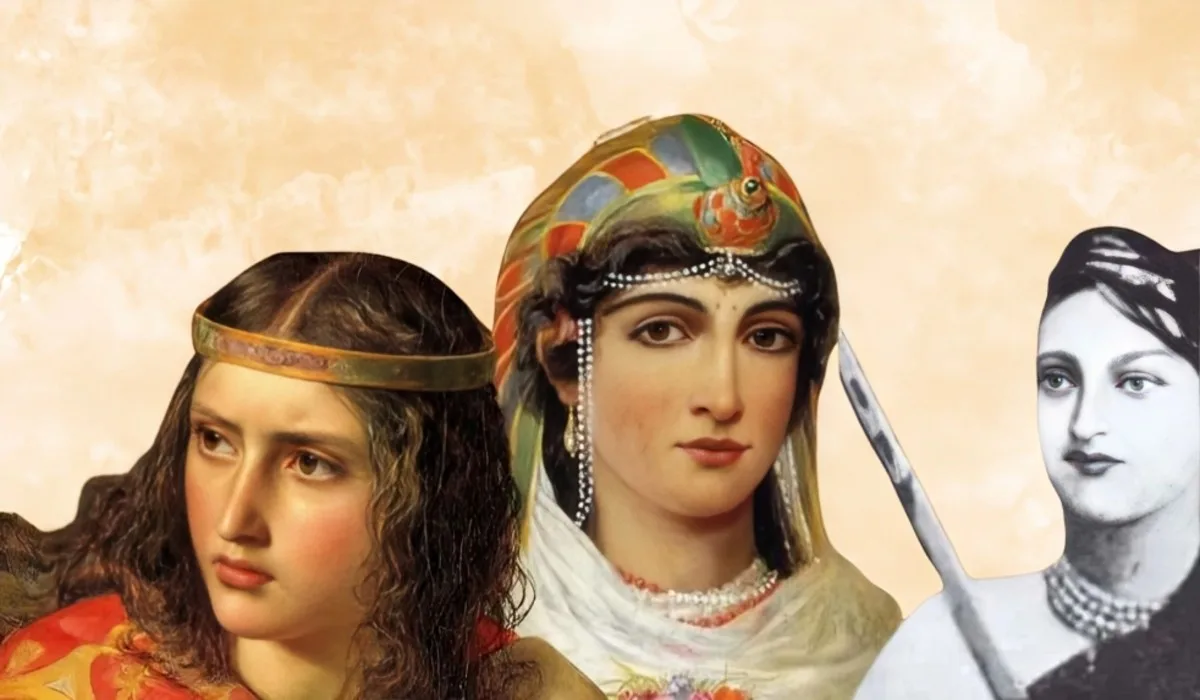
The first word that comes to mind when I think about these exceptional female rulers is "formidable." The majority of these women achieved power during times when society taught that women had less value than men.
The women of that time period fought against those beliefs by transforming countries, leading military forces, creating diplomatic partnerships, and establishing lasting impacts that we still recognize today.
The women obtained their power through forceful means because they faced constant challenges to their authority which they had to fight against to prove their detractors wrong.
Cleopatra VII (69-30 BCE)
The last Pharaoh of Egypt, Cleopatra VII, looked different from Elizabeth Taylor, but ancient writers considered her to have attractive features. The main source of her power stemmed from her ability to speak multiple languages and her political expertise and her attractive personality and her unending drive for achievement.
She formed alliances with Julius Caesar and Marc Antony while she worked to protect her dynasty and extend her power, which included taking out her teenage brothers who functioned as her husbands. Her attempt to establish control over both Egypt and Rome failed, yet her mythic status remained intact. We continue to be captivated by her two thousand years after her death. In the end, who really won?
Read More: The Legacy of the Goodest People in History
Queen Elizabeth (1533-1603)
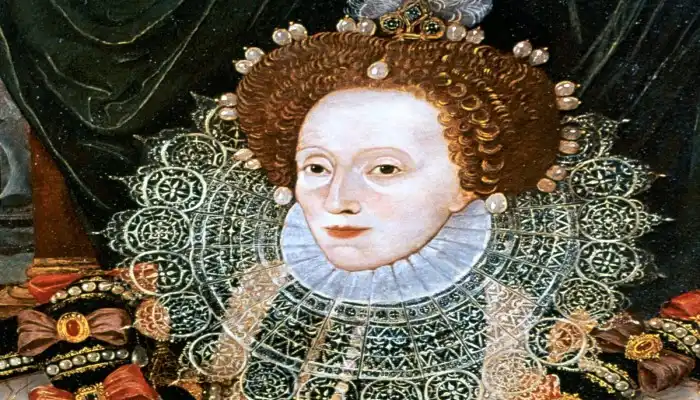
Elizabeth I's reign achieved impressive results through its support of Shakespeare Marlowe and the cultural golden age which followed but The Virgin Queen accomplished much more than that. She brought stability to her divided country by restoring the Church of England which her powerful father had established to enable his marriage to Anne Boleyn whom Elizabeth considered her mother.
She successfully eliminated two critical dangers which included her Catholic relative Mary Queen of Scots and the powerful Spanish Armada.
Empress Wu Zetian (624-705)
The extensive life of Wu Zetian which lasted through numerous upheavals introduced significant changes to China which remained into subsequent centuries. Her political ascent began when she became a concubine for Emperor Gaozong yet she later gained power as the mother who stopped her sons from becoming emperors.
She became the first Chinese woman to declare herself empress regnant after she crowned herself as empress. The intelligent and fierce leader who developed strategic plans established the brief Wu Zhou dynasty while she increased China's territory and improved the civil-service examination system by removing all who opposed her.
Catherine the Great (1729-1796)
Catherine the Great, one of Russia's most celebrated rulers, originated from Prussia as a princess who entered Russia at the age of sixteen to marry Peter III, who lacked impressive qualities.
When he finally inherited the throne in 1762, his reign lasted mere months before Catherine and her allies removed him from power, with his subsequent assassination clearing her path.
Queen Victoria (1819-1901)
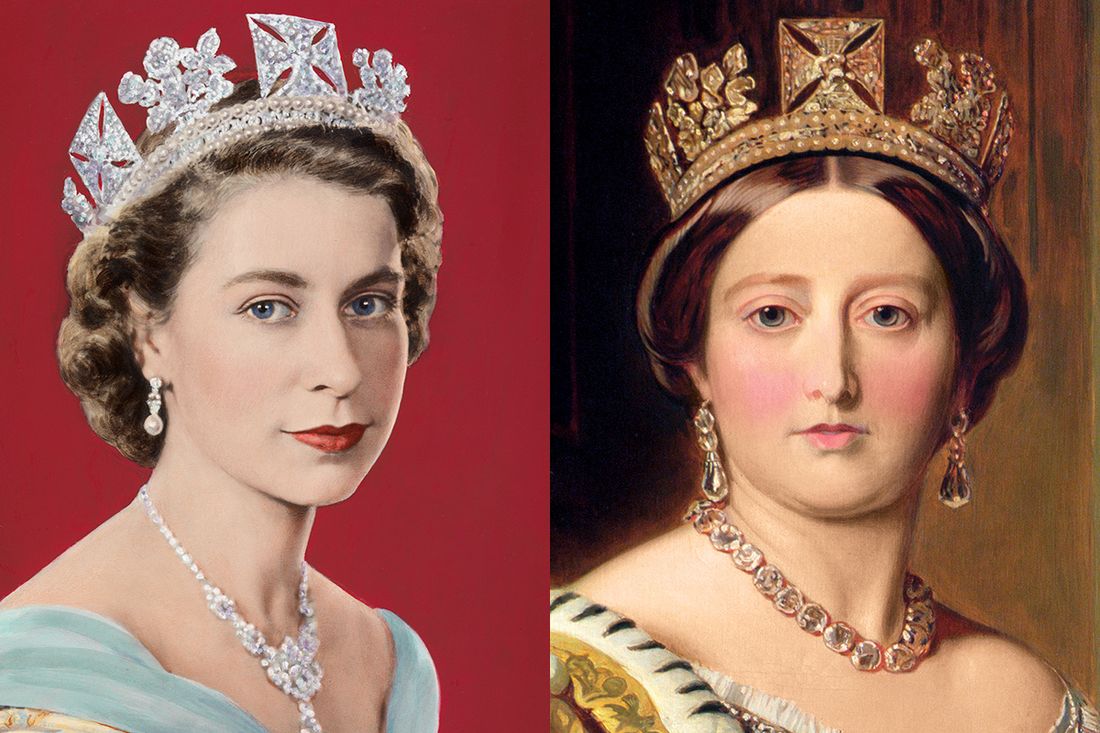
Queen Victoria ascended the British throne at just 18 and ruled until her death at 81, a tiny but indomitable force who produced nine children and an entire imperial dynasty.
The Queen ruled for seven decades through periods of scientific discovery and industrial growth and territorial expansion which transformed British society. Victoria learned about her daughter's future position as Empress of Prussia which led her to declare the title of Empress of India in 1876. The Queen ruled her times through a combination of emotional power and strong determination which created so much effect that people named the complete time period after her rule the Victorian era.
Queen Hatshepsut (c. 1507–1458 BCE)
Queen Hatshepsut was considered not so much a queen as a woman king, and there are busts of her not only wearing the pharaonic headdress but the beard. First she ruled beside her half-brother/husband Thutmose II. After Thutmose II died she became regent for her stepson Thutmose III who was still a toddler. The regent period did not satisfy her because she wanted to share the throne with Thutmose III.
The country enjoyed peace and prosperity during her rule which made her reign beneficial for Egypt. She created successful trade routes while she dedicated herself to construction projects. Her mortuary temple continues to exist in Deir el-Bahari.
Isabella I of Castile (1451-1504)
Isabella I of Castile is commonly remembered as the queen who used her jewels as collateral to finance Columbus's expedition which led to the discovery of the Americas and the subsequent flow of wealth to Spain yet her actual impact extended far beyond this accomplishment.
As coruler with her husband Ferdinand of Aragon Isabella I she helped Spanish unification through her work on standardizing currency and constructing roads and her efforts to complete the Reconquista by reclaiming southern Spain from Moorish control.
Queen Nzinga (c. 1583–1663)
Nzinga Ana de Sousa Mbande ruled the kingdoms of Ndongo and Matamba through her ability to conduct diplomatic affairs and her military combat skills. Her father trained her to master combat techniques and develop political strategies during her youth which occurred while transatlantic slave trade reached its peak and Portugal expanded its territorial control over southwestern Africa.
Nzinga refused to be intimidated through her alliance building and army leadership and her military strategy which she used to defeat European forces throughout her entire life.