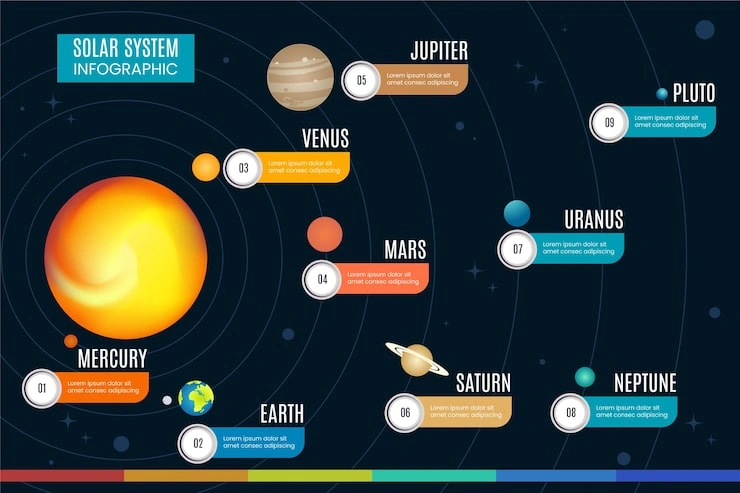
The solar system presents a diverse collection of moons which exists throughout its totality. The actual number of existing moons remains unknown at this time. Earth possesses a single natural satellite which people recognize as its main moon. Mars, which is Earths closest neighbor, has two natural satellites. Pluto, which is classified as a dwarf planet, has five moons that scientists have confirmed through observation. Neptune has 14 moons which circle around it while 27 moons orbit Uranus.
The massive planet Jupiter has 97 confirmed moons which circle it, but Saturn holds the record with 274 known moons. Venus and Mercury, meanwhile, are devoid of any such natural satellites. The solar system contains multiple moons which exist in different shapes and sizes and various types. The particular objects display exceptional beauty through their natural landscapes and orbital patterns and environmental features.
The Moon
The moon's near side which people know best. Our moon orbits Earth at an average distance of 384400 kilometers which makes it the largest natural satellite in the solar system when compared to its planet's size. Scientists estimate the moon's age at approximately 4.43 billion years based on its mineral composition. The time period started when Earth's core reached its final position.
Titan
Titan is the largest moon of Saturn and the second-largest natural satellite in the solar system. Titan is the only moon that has a complete atmosphere which covers its surface made of solid ice. Scientists think that Titan has a hidden ocean which exists under its icy surface.
Ganymede
Ganymede stands as the biggest moon in the solar system which outmatches all other satellites except for our moon when compared to Earth's dimensions. Ganymede is a massive moon because its size exceeds both Mercury and Pluto while coming close to Mars dimensions. Scientists believe Ganymede contains a subsurface ocean which extends beneath its frozen exterior, thus making the moon a possible site for extraterrestrial existence.
Pan
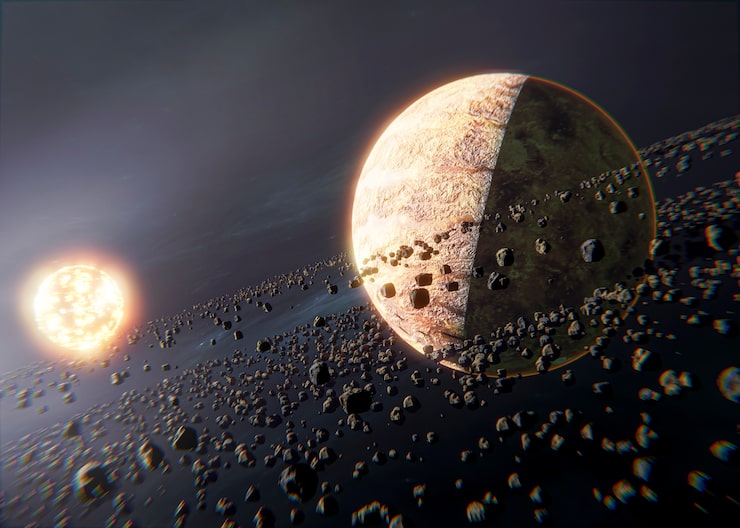
The innermost moon of Saturn which scientists have named Pan looks like a single envelope of ravioli. The small moon named after the Greek half-man half-goat satyr was discovered in 1990.
Read More: The Beauty Beneath The Waves: Secrets Of The Underwater World
Europa
NASA states that the Hubble Space Telescope has detected water vapor on Europa which is the sixth largest moon of the solar system and the fourth largest moon of Jupiter. Scientists believe that an ocean of water exists beneath Europa's frozen exterior.
Phobos
Scientists believe that Phobos which is the larger moon of Mars and its inner moon orbits Mars in a "death spiral" because its orbit slowly leads to Martian surface contact. The natural satellite is named after the Greek god Phobos, the personification of fear and panic, and the origin of the world phobia.
Enceladus
Enceladus exists as the sixth-largest moon of Saturn and it orbits the planet as its icy moon. The active moon contains a hidden ocean of salty liquid water which astrobiologists believe holds all the vital components needed for life to exist on Earth.
Io
With more than 400 active volcanoes, Io stands as the most geologically active celestial body in the entire solar system. The fifth moon of Jupiter ejects sulfur plumes that reach altitudes of 300 kilometers (190 miles) from its surface, which contains lakes of molten silicate lava.
Mimas
Mimas orbits Saturn while its surface consists of a combination of water ice and rock particles. The moon's enormous Herschel crater is named after the astronomer William Herschel (1738–1822), who discovered Mimas in 1789. Mimas received the name "Death Star" after its appearance in the 1977 film 'Star Wars' because of its striking similarity to the Empire's moon-sized space station.
Callisto
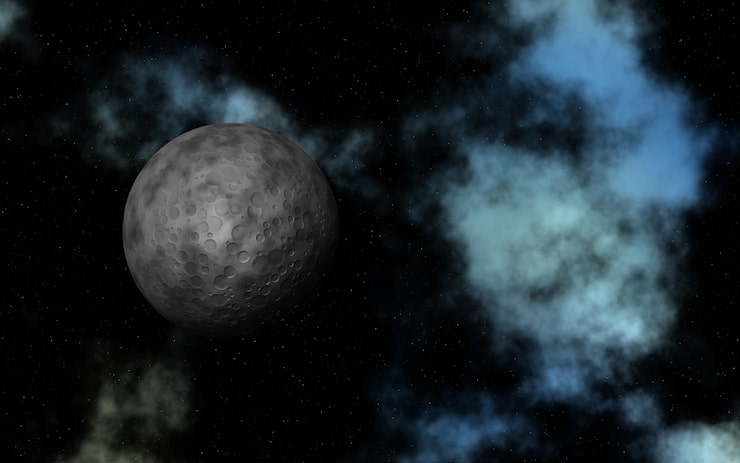
Callisto wins the award for being the most heavily cratered celestial object in the entire solar system. Callisto functions as the second-largest moon of Jupiter after Ganymede because experts believe it to be an ancient moon with minimal surface geological activity. The solar system contains one of its most ancient landscapes on Earth which dates back to a time period surpassing four billion years.
Hyperion
The solar system contains its largest non-spherical moon Hyperion which scientists believe originated as a piece from a more extensive ancient moon that received destructive impact during the early solar system period. The moon which orbits Saturn displays a unique visual appearance that resembles a spongy structure which contains multiple holes.
Triton
Neptune's satellites are dominated by one massive moon: Triton. One of the most intriguing bodies in the solar system, Triton features a south pole composed of frozen nitrogen and methane. NASA believes this weird and remote world to be among the most promising places in the entire solar system to look for signs of life.