Space is cool. I mean really cool. Like minus 400 degrees cool. But also hot. The Sun side of Mercury gets to 800 degrees. That is hot enough to melt metal. So space is both. Hot and cold. All at once.
Kids ask me about space all the time. What is out there? Are we alone? How big is everything? These are good questions. I will answer them. No fancy words. Just straight solar system facts for students.
The Sun Is Not What You Think
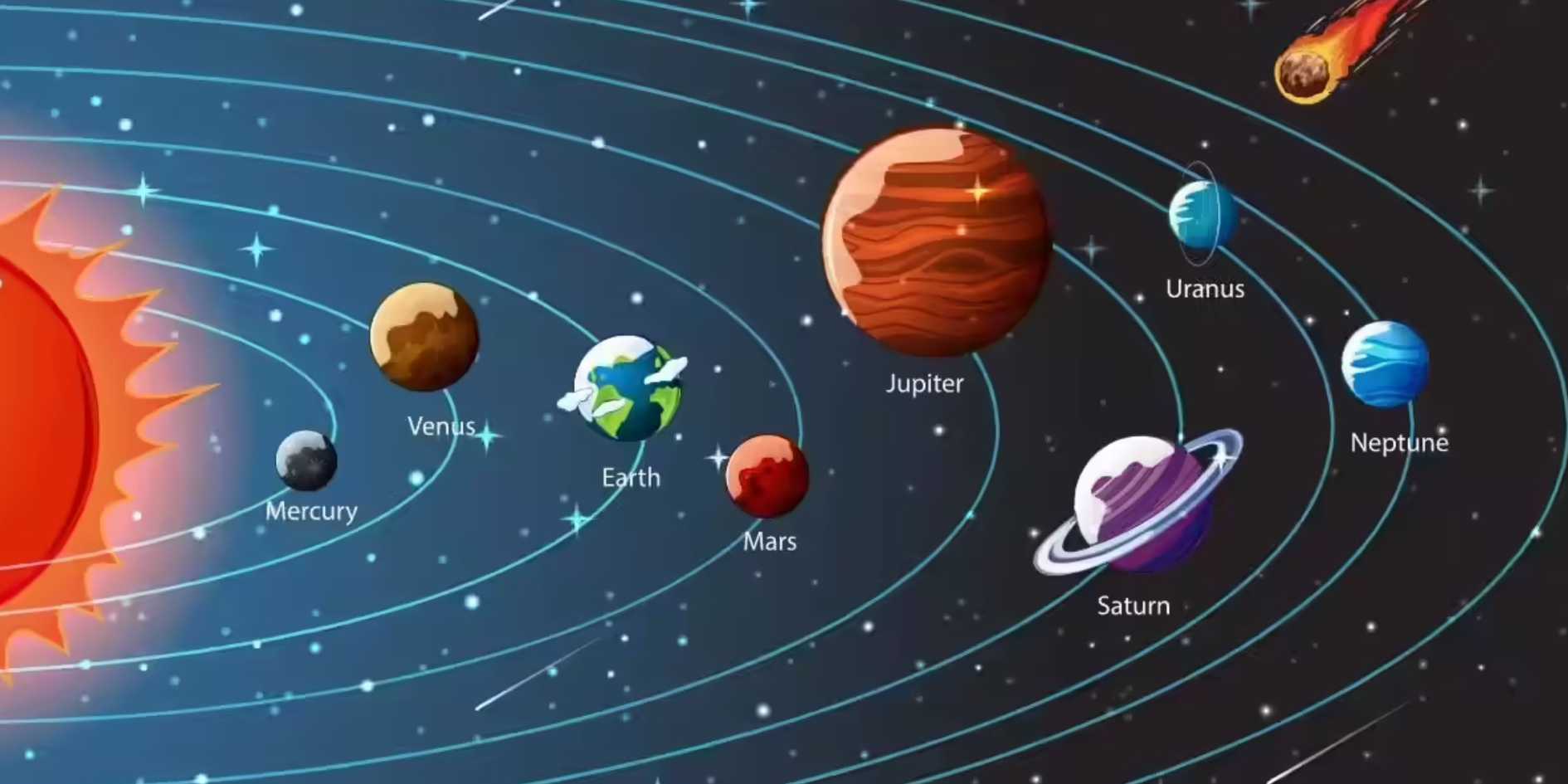
The Sun is big. Really big. You know how big Earth is? You could fit one million Earths inside the Sun. One million. That number does not feel real. But it is true.
The Sun is also heavy. It holds 99 percent of all the mass in our solar system. Everything else combined is just one percent. That includes all planets. All moons. All asteroids. Everything. That is how huge the Sun is.
But here is something weird. The Sun is actually white. Not yellow. We see yellow because of our atmosphere. The air bends the light. Makes it look warm colored. Go to space and look at the Sun. It is white.
Another thing. The Sun has spots. Dark spots. They look small from here. But some are bigger than Earth. Way bigger. These spots come and go. Scientists watch them. They tell us about solar activity.
Mercury Is A Mess
Mercury is the closest planet to the Sun. You would think it is the hottest. But no. Venus is hotter. Mercury has almost no atmosphere. No air means no blanket. So heat escapes at night.
Daytime on Mercury is roasting. 800 degrees. Nighttime is freezing. Minus 300 degrees. That is a 1,100 degree swing. Imagine that. Going from oven to freezer every single day.
Mercury looks like our Moon. All cratered and gray. No water. No life. Just rock. Boring rock. But interesting rock. Because it tells us about the early solar system.
Read Also: Ancient Inventions That Prove History Was More Advanced Than We Thought
Venus Is A Nightmare
Venus is the second planet. It is almost the same size as Earth. Same size. Same type of rock. But completely different. Venus is covered in clouds. But not water clouds. Acid clouds. Sulfuric acid. That stuff burns. It would eat through your skin. So do not visit Venus. The atmosphere on Venus is thick. Really thick. Like being underwater thick. And it traps heat. All the heat. This is the greenhouse effect. It makes Venus the hottest planet. Even hotter than Mercury.
Venus spins backward. Most planets spin one way. Venus spins the other way. Why? Nobody knows. Maybe something hit it. Maybe it just does that. Space is weird.
Earth Is Our Home
Earth is number three from the Sun. We live here. It has water. Liquid water. That is rare. Very rare. Water makes life possible. Earth is not too hot. Not too cold. Just right. We call this the Goldilocks zone. Everything is just perfect for life. We have one Moon. It orbits us. It controls tides. It also keeps Earth stable. Without the Moon, Earth would wobble. Wobbling causes crazy weather. So thank the Moon.
Earth has a magnetic field. This field protects us. Solar wind from the Sun would strip away our atmosphere. But the magnetic field blocks it. Keeps us safe.
Mars Is The Red One
Mars is red. That is why people call it the red planet. The color comes from iron. Iron that has rusted. Like a old car left out in the rain. Mars is cold. Much colder than Earth. Average temperature is minus 80 degrees. Sometimes it gets colder. Sometimes warmer. But mostly cold.
Mars has the biggest mountain in the solar system. It is called Olympus Mons. It is three times taller than Mount Everest. Three times. That is massive. It is so big it pokes out of Mars's atmosphere.
We have sent robots to Mars. Lots of them. They drive around. Take pictures. Dig in the dirt. They found evidence of water. Old water. Rivers and lakes that dried up. So maybe Mars had life. Maybe it still does. Deep underground.
I want to go to Mars. I think about it. You probably do too. But it is hard. It takes months to get there. You have to bring everything. Food. Water. Air. No mistakes allowed.
Jupiter Is A Giant
Jupiter is the biggest planet. By far. You can fit 1,300 Earths inside. That is not a typo. 1,300.
Jupiter is a gas planet. No solid surface. If you tried to land, you would sink. Through clouds. Through gas. Deeper and deeper. Until you got crushed. Jupiter has a red spot. This is a storm. A giant storm. It has been going for hundreds of years. Maybe longer. The storm is bigger than Earth. One storm. Bigger than our whole planet.
Jupiter spins fast. One day is only 10 hours. That is fast for something so big. It bulges at the middle. Spinning makes it wider around the equator. Jupiter has 95 known moons. That is a lot. Four of them are big. They were discovered by Galileo. He saw them through his telescope. That was in 1610. People thought he was crazy. But he was right.
One of Jupiter's moons is Europa. It is covered in ice. Under the ice is water. Liquid water. Maybe an ocean. And where there is water, there might be life.
Saturn And Its Rings
Saturn is the ring planet. Everyone knows that. But the rings are not solid. They are made of ice chunks. Some are tiny. Some are huge. Big as a house. They all orbit Saturn. Saturn is the second biggest planet. Still huge. But it is light. Actually the lightest planet. If you had a giant bathtub, Saturn would float. That is how light it is.
Saturn spins fast too. One day is about 10 and a half hours. And it has more moons than Jupiter. 146 known moons. New ones found all the time. One moon is Titan. It has a thick atmosphere. Thicker than Earth's. It has lakes. But not water lakes. Methane lakes. Liquid methane. That is like gasoline. Strange place.
Saturn is beautiful. Through a telescope, it is amazing. The rings are tilted. We see them differently as Saturn orbits. Sometimes edge-on. Sometimes wide open.
Uranus Is On Its Side
Uranus is weird. It spins sideways. All the other planets spin upright. Uranus is tilted 98 degrees. Almost flat on its side. Why? Something big hit it. A long time ago. Smacked it right over.
Uranus is blue-green. That comes from methane in its atmosphere. Methane absorbs red light. Reflects blue. That is the color we see.
Uranus has rings. But they are faint. Hard to see. You need a powerful telescope. I have looked. Could barely see them. But they are there.
Uranus is cold. Very cold. Minus 370 degrees. That is the coldest of all the planets. Even colder than Neptune. Even though Neptune is farther from the Sun. Makes no sense. But it is true.
Uranus has 27 moons. All named after Shakespeare characters. Oberon. Titania. Puck. The man liked his literature.
Neptune Is The Windy One
Neptune is the farthest planet. The eighth one. It is a blue planet. Beautiful blue. Like a sapphire in space.
Neptune has the strongest winds. Hurricane force winds are bad. But Neptune winds are supersonic. Faster than the speed of sound. One thousand miles per hour. Anything in that wind would be ripped apart.
Neptune is cold too. But not as cold as Uranus. It has internal heat. Heat from its core. That keeps it a little warmer. Just a little. Still freezing.
Neptune has 16 known moons. The biggest is Triton. Triton orbits backward. That is rare. Most moons go the same direction as the planet. Triton goes the other way. It might have been captured. Grabbed by Neptune's gravity.
Triton has geysers. Like Yellowstone but on a moon. It erupts nitrogen. Cold nitrogen gas. Into space. Amazing to see. If you were there.
You May Also Like: The Invisible Architects: How 11 Women Rewrote the Rules of Modern Engineering
Asteroids Are Space Rocks
Between Mars and Jupiter there is a belt. Full of rocks. Millions of them. We call them asteroids. They are leftovers. Leftover from when the solar system formed.
Asteroids are different sizes. Some are tiny pebbles. Some are as big as states. Ceres is the biggest. It is actually a dwarf planet now. They changed its status.
Sometimes asteroids leave the belt. They come toward Earth. We track them. We have a whole system watching. Because if a big one hit us. Well. It would be solar system facts for students.
The Kuiper Belt And Beyond
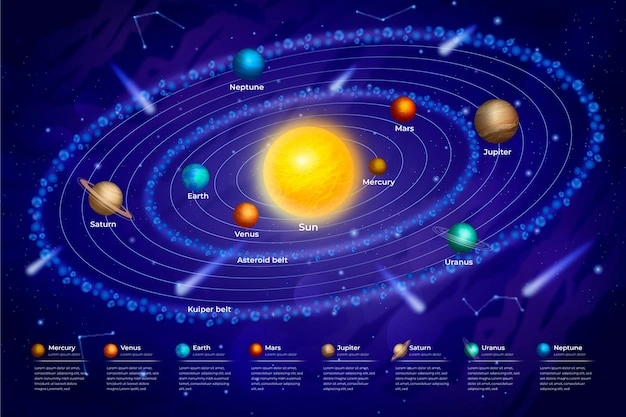
Past Neptune, there is more stuff. A belt of icy objects. This is the Kuiper Belt. It is much bigger than the asteroid belt.
Pluto lives there. Pluto used to be a planet. Not anymore. Now it is a dwarf planet. Some people got angry about that. I understand. But it is okay. Pluto is still Pluto.
Pluto is small. Smaller than our Moon. It has a heart shape. A big heart on its surface. That is cute.
There is also the Oort Cloud. Very far away. Farther than anything else. It wraps around the whole solar system. Like a bubble. Trillions of icy objects there.
Comets
Comets come from the outer solar system. They are made of ice and dust. Dirty snowballs. That is what people call them.
When comets get near the Sun, they heat up. The ice turns to gas. This makes a tail. A glowing tail. The tail always points away from the Sun. Always.
Some comets visit us often. Halley's Comet comes every 76 years. People have been watching it for centuries. It is famous. You can see it with your eyes. No telescope needed.
Shooting Stars
Meteoroids are small rocks. Tiny rocks. They enter Earth's atmosphere. They burn up. This makes a streak of light. People call them shooting stars. They are not stars. Just burning rocks.
Sometimes bigger ones hit the ground. Then they are called meteorites. We find them in deserts and Antarctica. They are black and heavy. Full of iron. Cool to hold.
How Old Is Our Solar System?
Our solar system is 4.6 billion years old. That is a long time. Hard to imagine. Let me try. If the solar system was a day old, humans have been around for one second. Maybe less. We are new. Very new.
It started as a cloud. A cloud of gas and dust. It spun. Gravity pulled things together. The center became the Sun. The rest became planets. That is the story.
Are We Alone
This is the big question. Are we alone in the universe. I do not know. Nobody knows. But we are looking.
We have sent messages out. Radio signals. Pictures. Math equations. In case someone is listening. Nobody has replied yet. But space is big. Really big. Maybe they did not hear us. Maybe they are too far.
I hope we are not alone. It would be sad. To be the only ones.
What Can You See?
- You can see planets from your backyard. No telescope needed. Venus is bright. Jupiter is bright. Mars is red and bright. Saturn too.
- Binoculars help. You can see Jupiter's moons. Four little dots next to the planet. Amazing to see with your own eyes.
- Look up tonight. Find a bright star that does not twinkle. That is probably a planet. Stars twinkle. Planets do not.
Final Thoughts
Space is big. Our solar system is big. We are small. Tiny. But we have big brains. We ask big questions. We build big machines to explore. We have walked on the Moon. We have rovers on Mars. We have probes going out of the solar system. Voyager 1 left in 2012. It is still going. Still sending signals. It will keep going. For billions of years.
That is cool. To think about. A piece of us. Going out there. Forever. So learn about space. Read about it. Look at the stars. Ask questions. There is so much to discover. And you could be the one to discover it.