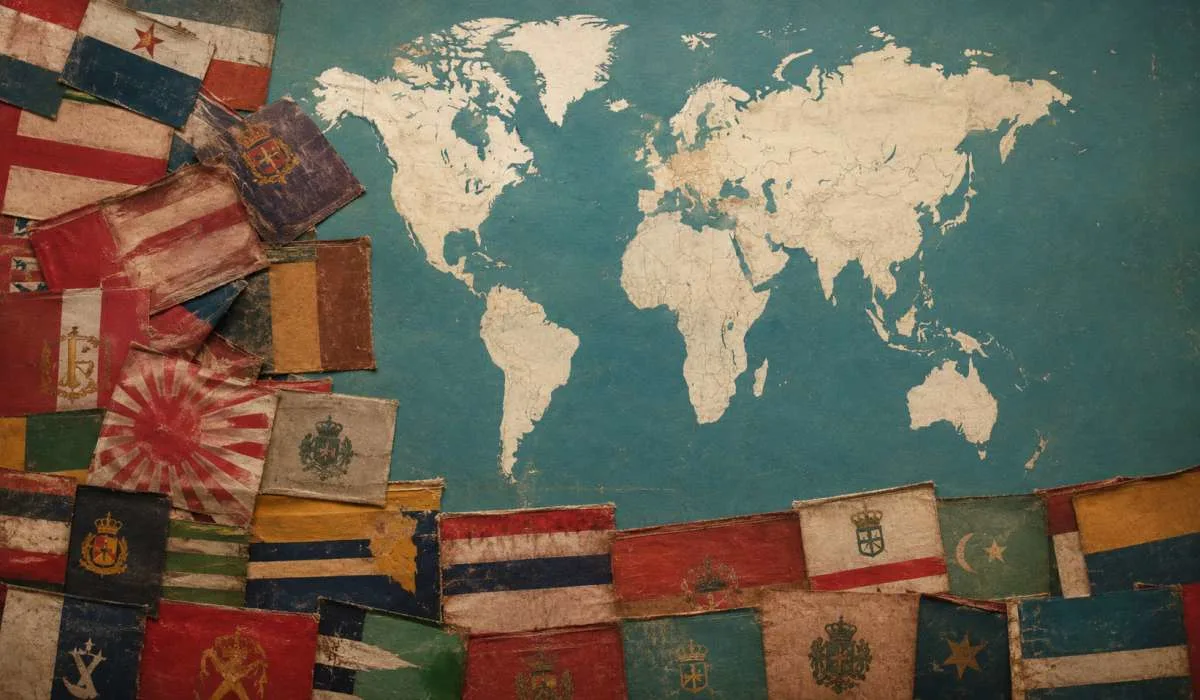
Countries That Disappeared From the World Map have played an important role in shaping the modern world. Throughout history, many powerful kingdoms, republics, and empires rose to greatness before disappearing because of wars, political changes, invasions, or economic decline.
Although these nations no longer exist on today's map, their culture, architecture, and traditions continue to influence modern countries. From the Republic of Venice and the Ottoman Empire to the Mali Empire and the Kingdom of Ayutthaya, each lost nation has a unique story that helps us understand the changing history of the world.
Nations that are no more
Today, the world recognizes 195 nations, but throughout the ages of civilization, thousands of nations have emerged into existence and later disappeared. These nations consist of compact kingdoms and large cities.
Republic of Venice (697-1797)
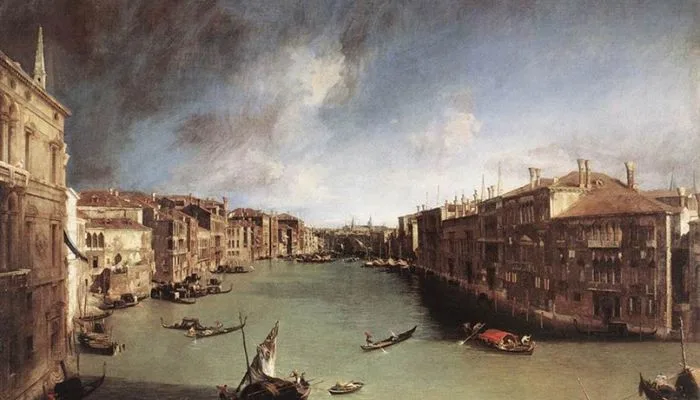
Nowadays, when you think of Venice, you might imagine canals in an endless maze and crowded buildings and museums full of tourist groups. Before the Most Serene Republic of Venice rose in fame with a multitude of holidaymakers, Venice was an astonishing sea power that lasted for over a thousand years.
Established in 697 AD, this city-state grew to become a super-powered entity through trade and economy, with affluent merchant rulers who didn't waste money at all on gorgeous art and structures. At one of its most dominant stages, Venice’s territory expanded over today’s northeast Italy, and parts of Croatia, Slovenia, Montenegro, Albania, Greece and Cyprus.
Read More: Solar System Facts For Students
Couto Misto (c.900-1864)
Couto Misto, consisting of the three villages of Rubias, Santiago de Rubias, and Meaus, benefited from various freedoms ranging from tax exemptions to exemption from military service. This special treatment was never permanent, and the Treaty of Lisbon ultimately abolished the microstate in 1864.
According to this treaty, Spain would receive all three villages, and Portugal would gain a small, uninhabited tract of land. Currently, the Couto Misto region belongs to the province of Ourense.
Kingdom of Bohemia (1198-1918)
Today the country known as the Czech Republic – formerly Czechia, among other names – traces its significant, centuries-old imprint on the Czech character back to the Kingdom of Bohemia.
In existence from the last few decades of the 12th century onwards, Bohemia and capital Prague, played a central role in the largely disparate Holy Roman Empire by serving on several occasions as the imperial seat.
Mali Empire (c.1230-1670)
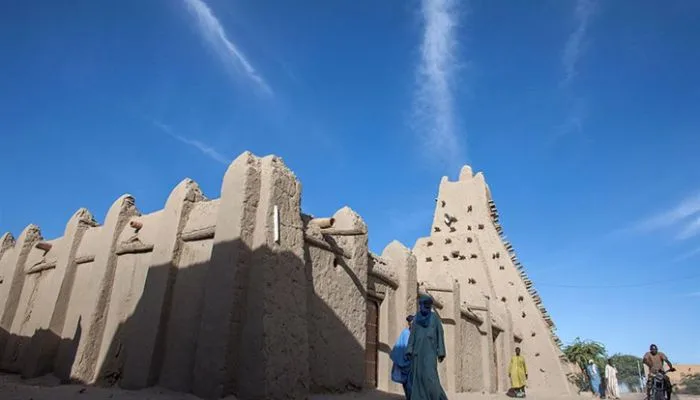
In the aftermath of the rich king’s death, civil wars also shattered his empire’s fortune and, by the turn of the 18th Century, the Moroccan empire captured it.
But numerous structures survived the decline and are there to see, including this is the ancient Mosque of Sankore, in Timbuktu. It appears that open spaces of the mosque were inspired by Mecca’s Great Mosque, many portions of its clay walls remain included today into what would later be named the University of Sankore.
Ottoman Empire (1299-1923)
One of the largest and longest-lasting empires in history was the Ottoman Empire. It began to bloom from the province of Anatolia (modern Turkey) in the late 1300s. However, it quickly entered its superpower period with Sultan Suleiman the Great when it extended over southeast Europe in addition to much of the Middle East and the Maghreb at the peak of the Ottoman Empire from 1520 to 1566.
The Ottoman troops famously arrived at Vienna in 1683 where, with the backing of what can be claimed as history's greatest cavalry assault, they repulsed the enemy on 2 occasions.
Kingdom of Sardinia (1324-1861)
Later in the same year, they declared the Kingdom of Sardinia as the Kingdom of Italy, and they moved its capital from Turin to Florence and ultimately Rome, the modern nation of Italy. Nowadays, the lovely, sun-drenched island of Sardinia remains as it has for centuries a favourite destination for holidaymakers that are keen for white sandy beaches, quaint pastel-coloured houses, historic villages and architecture from a much, much greater era!
You May Also Read: How To Crack Upsc Prelims In First Attempt
Moldavia (1346-1859)
And so it ended, incorporating Wallachia in 1859 to all intents and purposes and creating present-day Romania. You can still visit fine examples of Moldavian architectural examples Putna Monastery built in the 15th century in Bucovina (shown above), Capriana Monastery near Capriana in Moldova, and Trei Ierarhi Monastery near Iasi.
Kingdom of Ayutthaya (1351-1767)
The kingdom crumbled and fell in the 18th century. Economic woes and political turmoil brought Ayutthaya down to its knees, and the kingdom faced a brutal invasion by the Burmese army (current day Myanmar) in 1765 and finally surrendered in 1767. It represented the end of an age long passed.
Today, the majority of the country remains at its historically greatest, and now best preserved at the Unesco World Heritage site - the Historic City of Ayutthaya (pictured).
FAQs
1. What are countries that disappeared from the world map?
These are nations, kingdoms, or empires that once existed as independent states but later disappeared due to conquest, political unions, or territorial changes.
2. Why did many ancient countries disappear?
Most disappeared because of wars, invasions, economic decline, colonial expansion, civil conflicts, or mergers with neighboring states.
3. Which is one of the most famous disappeared countries?
The Ottoman Empire is one of the most famous, as it ruled large parts of Europe, Asia, and Africa before ending in 1923.
4. Can people still visit places from these lost countries?
Yes. Many historical sites, castles, temples, monasteries, and ancient cities remain preserved and are popular tourist attractions today.
5. How many countries have disappeared throughout history?
Historians estimate that thousands of kingdoms, city-states, and empires have disappeared over the course of human civilization, leaving only historical records and archaeological remains.