Infamous betrayals in the history of the world show some of the most shocking moments in history. In all history, great kings, generals, politicians and common folk have duped their allies, rulers, and even their own countries for various purposes. Some did it for money or personal benefit; others did it for a bigger purpose.
Stories such as those of Ephialtes, who led the Persian forces around Thermopylae, and Benedict Arnold, who secretly negotiated with the British, made a difference in the course of history. A few traitors were given rewards, others were punished, or remembered in dismal memory forever. The following are 20 notorious betrayals that still captivate historians and readers.
Ephialtes of Trachis – A traitor driven by greed
In the battle of Thermopylae (480 BC), King Leonidas of Sparta led his army (which contained only three hundred Spartans, but at least seven thousand allies) against an army of tens of thousands serving under King Xerxes of Persia. When all things looked really bad for Xerxes, a local Greek known as Ephialtes of Trachis led Xerxes' army round the sides of the Spartan army; of course, Xerxes defeated the Greeks.
However, Ephialtes never received the enormous reward promised; furthermore, someone put a reward upon his head soon after as traitors have to die, and assassins killed him at some point after 470 BC.
Read More: Interesting Facts About Ancient Egypt

Brutus – Redemption at knifepoint
When Julius Caesar arrived at the Roman Senate for a meeting on March 15, 44 B.C., a band of senators ambushed him and stabbed him 23 times, one of which blows came from an old proteg of Caesar's, Marcus Junius Brutus. Brutus, as recently as a few years prior, had fought against Caesar alongside another rival, Pompey, during one of Rome's civil wars. Caesar won the war but pardoned Brutus and allowed him a place among the Senate.
Judas Iscariot – A traitor among the faithful
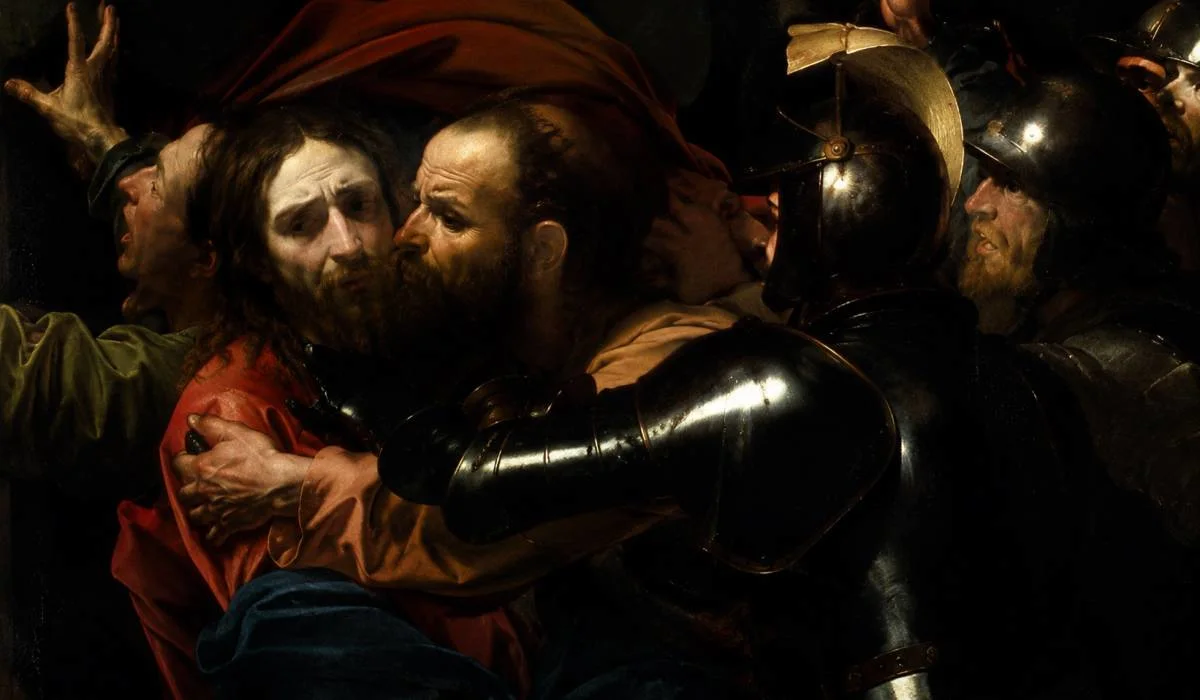
Jesus selected Judas as one of the twelve men to serve as his disciples—the group of twelve known as the apostles. On the eve of Jesus and his apostles’ last shared dinner, which they called the Last Supper, Jesus told them that one among them was betraying him. After Judas handed Jesus over to the authorities days later, receiving 30 pieces of silver in exchange, they waited in the Garden of Gethsemane.
They knew to arrest the man when Judas identified Jesus with a kiss to his cheek. The soldiers took him before Pontius Pilate, the Roman governor of Judaea, where he faced a trial and crucifixion. Judas’s guilt over his treachery ate at him to the point he could no longer bear the thought. In despair, he then ended his own life.
La Malinche – An indispensable traitor
An Amerindian slave girl, born of Nahua people, La Malinche played a unique role in the conquest of Mexico when Hernan Cortes arrived from Spain in 1519. After he sold and resold her, Cortes brought her into his service. The conquistador quickly became attracted to her and found her to be very helpful in his campaigns.
Because she was skilled in the languages, Cortes used La Malinche to interpret for him during his wars with the Aztec warriors and to help him strategize winning campaigns such as the taking of the Yucatán peninsula – at her own expense.
Guy Fawkes – The Gunpowder Plot
Before that, he had served in the Spanish army as an explosive specialist who planned the attack on King James I’s royal court that officials thwarted on 5th November 1605. They called it the Gunpowder Plot and involved the explosion of a load of barrels of gunpowder under the Houses of Parliament in Westminster.
It was Guy Fawkes’s job to light the fuze. He was apprehended just before the barrels could explode by officials, who caught him standing next to the contents in the cellar. Officials took Fawkes to the Tower of London, where they imprisoned and tortured him before taking him out to the gallows.
Louis XIII – The king who picked his advisor over his own mother
The Day of the Dupes was the episode of the reign of king of France Louis XIII which marked the opposition between Marie de Medici and the first minister, Cardinal de Richelieu. During this day, called the two days that separated Marie and Richelieu on 10 and 11 November 1630, she wanted to send out the minister in order to remove her influence on the king, who was her son.
The king convened him to Versailles, and he thought he was discharged, but the king rather promised him favor by denouncing his mother to her exile.
Benedict Arnold – The epitome of an American traitor
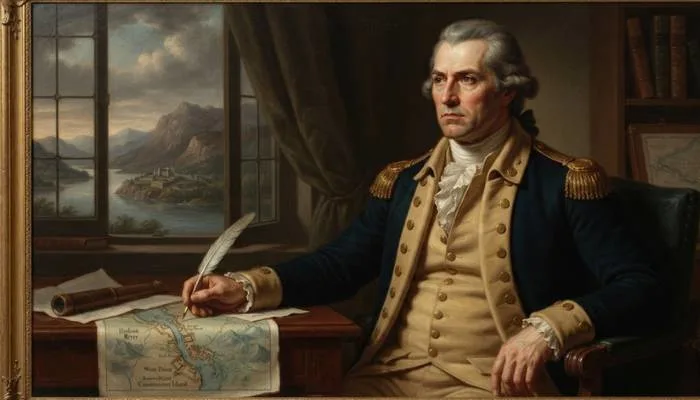
Benedict Arnold served as a general with the American Continental Army for a time during the American Revolution. In 1780, Arnold entered into negotiations with the British to surrender the American Fort at West Point to the British in return for an officer's commission with the British Army and 20,000 pounds sterling.
Although the British thwarted the plot, they forced him to fly into British territory, and for that, they awarded him the rank of Brigadier General, along with 6,000 pounds sterling. This is a very well-known plot in American history, and Arnold's name will always be synonymous with the term "national traitor."
You May Also Read: Ancient Inventions That Prove History Was More Advanced Than We Thought
James Armistead Lafayette – America’s first Black double agent
On behalf of the U.S. In the heat of the American Revolutionary War (1775 to 1783), this African-American slave served as a double agent inside the British lines. Marquis de Lafayette, commander of his troops which backed the Americans, conceived the idea of using Armistead for that purpose.
The strategy was successful the British enlisted Armistead for spying. Having been strategically placed between the armies, James Armistead gave intelligence to the U.S. Military and obtained a treasure trove of documents including British military planning. The intelligence gained through his efforts contributed to the success of the U.S. Military at the Battle of Yorktown in 1781.
FAQs
1. What are the most infamous betrayals in history?
Some of the most famous examples include Judas Iscariot's betrayal of Jesus, Brutus's involvement in the assassination of Julius Caesar, Ephialtes's assistance to the Persians and Benedict Arnold's attempted surrender of West Point.
2. Who is considered one of history's most famous traitors?
Benedict Arnold is widely remembered as one of the most famous traitors in American history. His name became strongly associated with treason after he attempted to hand West Point over to the British.
3. Why did Ephialtes betray the Greeks?
Ancient accounts traditionally describe Ephialtes as motivated by the expectation of a reward from the Persians. He revealed a route that allowed Persian troops to move around the Greek defenders at Thermopylae.
4. Why did Brutus betray Julius Caesar?
Brutus joined the conspirators who killed Caesar because he and other senators feared Caesar's growing power and believed that removing him could protect the Roman Republic.
5. Was La Malinche really a traitor?
La Malinche's legacy is complicated. She assisted Hernán Cortés as an interpreter and adviser, but she was originally enslaved and lived during a period of intense political conflict. Modern historians often examine her role in a broader context rather than simply calling her a traitor.