Rare historical pictures of China offer a fascinating window into the country’s past, capturing everyday life, cultural traditions, major events, and changing landscapes from the late 19th and early 20th centuries. The world's first photographs, black-and-white images that took around eight hours to develop, emerged in France in 1826 or 1827. In the decades that followed, photographers around the world experimented with color, perspective and presentation, displaying photos using "magic lanterns" and other slide projectors.
Mass-produced postcards became popular worldwide in the late 1800s and early 1900s. These rare historical pictures of China offer a memorable journey into early 20th-century China, capturing its people, culture, traditions, and changing landscapes through vintage photographs.
A Glimpse Into China’s Forgotten Past Through Rare Historical Photos
These rare historical photographs of China capture everyday life, traditions, and important moments from a changing era. From old cities and cultural practices to ordinary people and historic events, these images preserve stories from China’s fascinating past.
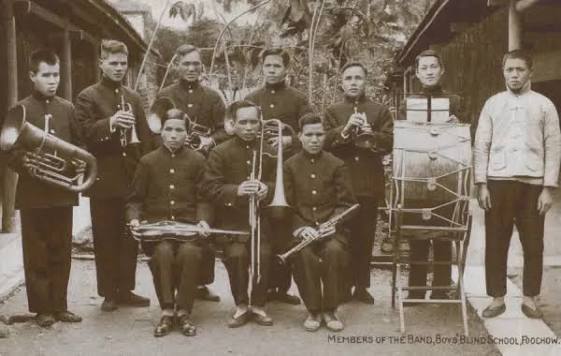
School for the Blind band (Fuzhou)
This photo from the early 1910s shows band members from the Fuzhou School for the Blind. According to the University of Bristol (which maintains an online archive of historical photos of China), Australian nurse and missionary Amy Oxley Wilkinson founded the Church Missionary Society Blind Boys’ School in 1898 in Fuzhou, southeastern China. Music ensembles from the school “later began touring Fujian province, then [travelled] to other parts of China, and finally to the UK,” according to the university.
Read More: Difference Between Culture and Tradition: Simple Real-Life Examples
Nun giving alms (Shanghai)
This photo, believed to be from the late 1890s or early 1900s, shows a Catholic nun in Shanghai giving alms to a begging child. The photographers took the photo “before or shortly after” the Boxer Rebellion, a nationalist revolt in 1900 that attempted to overturn the Chinese imperial regime and drive all foreigners from the country. According to Encyclopedia Britannica, the rebels also attacked both Chinese and foreign Christians. As many as 100,000 people died in the revolt; according to the encyclopedia, “the great majority of those killed were civilians, including thousands of Chinese Christians and approximately 200 to 250 foreign nationals (mostly Christian missionaries).”
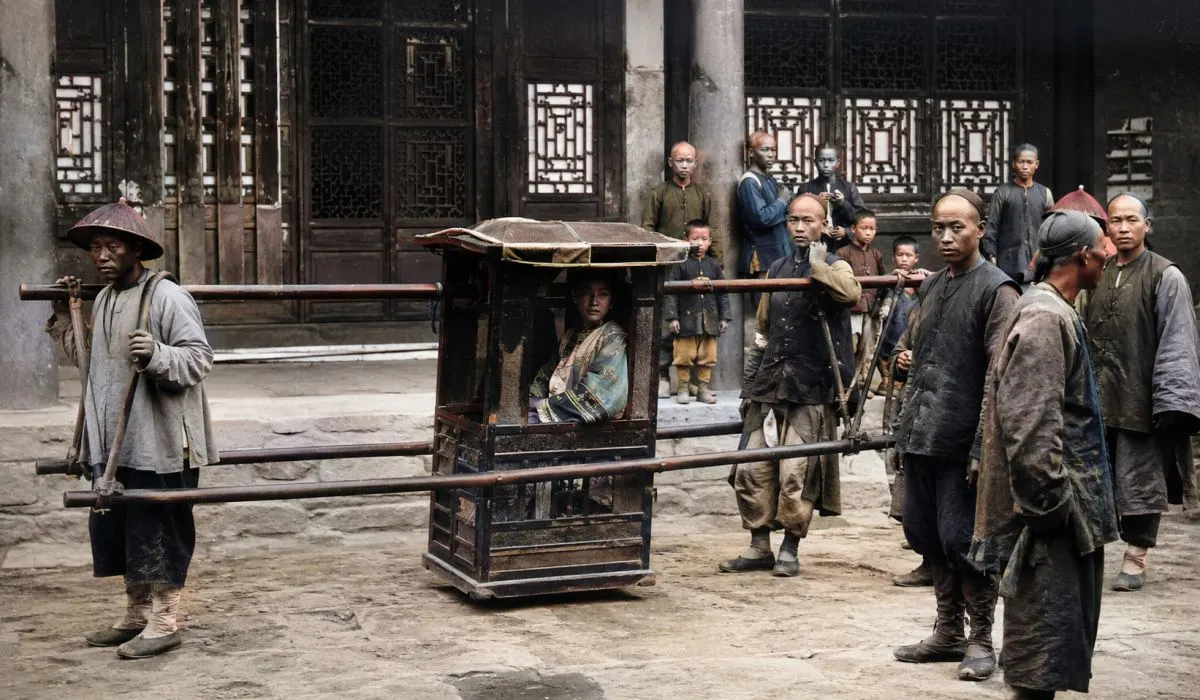
Palanquin and rickshaw (location unknown)
This image from the 1870s is shown by a man being carried on a palanquin (also known as a Chinese sedan chair) by three other people. According to chinaculture.org, use of the palanquin to transport people, usually people of high rank, dates back 4,000 years. “Generally, the number of carriers and the size of the sedan [chair] can indicate the status of the user,” says the site. In centuries past, high-ranking officials were carried in palanquins by specially trained civil servants; today, when they’re used at all, brides are carried on their wedding days.
Market day during the flood (Wuhan)
This photo from late September 1931 shows traders at an open-air market along the Yangtze River in Wuhan (then Hankow), conducting business while waist-deep in water. According to the History Channel, the Yangtze hit its highest point on August 18, 1931; floods that year killed as many as 3.7 million people, due not only to the rising waters but also to starvation—rice fields were swamped—and epidemics. In normal times, large-scale disaster may have averted, but “with much of the area’s resources devoted to civil war at the time, they neglected the river.” The History Channel calls the floods “perhaps the worst natural disaster of the 20th century.”
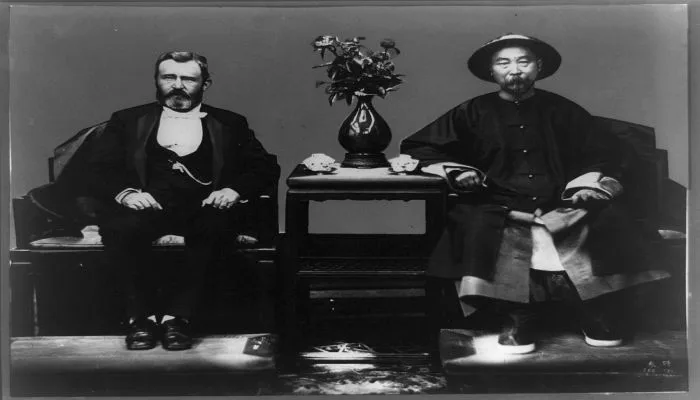
Grant visits China (Tianjin)
Ulysses S. Grant, the general who led the Union forces to victory in the American Civil War, served two terms as president of the United States during the postwar years (from 1869 to 1877). Once out of office, Grant decided to see the world. The former president and his wife toured Europe and the Mediterranean and were about to return home when the U.S. government asked him to serve as a goodwill ambassador in Asia.
According to Humanities magazine, Grant “made a friend in Viceroy Li Hung-chang [pictured], whom he judged to be ‘probably the most intelligent and most advanced ruler if not man in China.’” After Grant’s departure, no acting or former U.S. head of state would visit China until President Richard M. Nixon did so in 1972, nearly a century later.
You May Read Also: Top Traditional Festivals of Rajasthan 2026
Junks in the harbour (location unknown)
Glasshouse Images/Shutterstock This photo from around 1880 used the albumen process, popular in late 19th- and early 20th-century photography. Photographers would mix ammonium chloride or sodium chloride with egg whites and develop the photos using the mixture, leaving a glossy finish.
According to the Mariners' Museum and Park in Newport News, Virginia, boats like these, known as junks and recognizable by their curved sails reinforced with bamboo bars, date back nearly 5,000 years and are still used as fishing boats today.
Board game day (Shanghai)
This albumen print shows a group of young men playing a board game in Shanghai, around 1880. Once a fishing village, the British named Shanghai a treaty port at the end of the First Opium War, in 1842. From then on, as this New York Times/ Fodor’s feature states, the British, French, and Americans carved the city up into autonomous concessions administered concurrently, all independent of Chinese law. Shanghai grew into a bustling, cosmopolitan trading port attracting not only foreign businesspeople, but migrants from across China.
FAQs
1. What do rare historical pictures of China show?
Rare historical pictures of China show traditional lifestyles, old cities, transportation methods, markets, social exercises, and critical authentic occasions from the past.
2. When were the earliest photographs of China taken?
The earliest photographs of China appeared during the 19th century after photography was introduced globally, with many surviving images dating from the late 1800s and early 1900s.
3. What can old China photos tell us almost history?
Old China photographs give visual prove of social life, engineering, clothing, conventions, financial exercises, and the affect of verifiable occasions on communities.
4. Why are vintage photographs of China important?
Vintage photographs preserve memories of places and individuals that have changed over time, helping students of history and analysts think about China’s social and authentic development.
5. Which places are featured in these chronicled China images?
The collection incorporates places such as Shanghai, Wuhan (Hankow), Fuzhou, and Tianjin, appearing diverse angles of Chinese society and history.